
Are dimples dominant or recessive is a common genetics question many people ask. Dimples are small indentations that appear on the cheeks when you smile. In most cases, people believe dimples are a genetic trait passed from parents to children. Scientists say dimples are usually linked to dominant genes, but the truth is more complex. It is not a simple one-gene rule. Genetics can vary from person to person.
This article explains dimples in very simple English. You will learn how dimples form, how they are inherited, and whether they are dominant or recessive. You will also see real-life examples, common myths, and expert insights. Keep reading to understand the science behind this cute facial feature.
Quick Summary: Are Dimples Dominant or Recessive?
- Dimples are mostly linked to a dominant genetic trait
- One parent with the gene can pass dimples to a child
- Inheritance is not always guaranteed
- Multiple genes may affect dimple formation
- Environmental and facial muscle factors also play a role
What Are Dimples? (Simple Meaning)
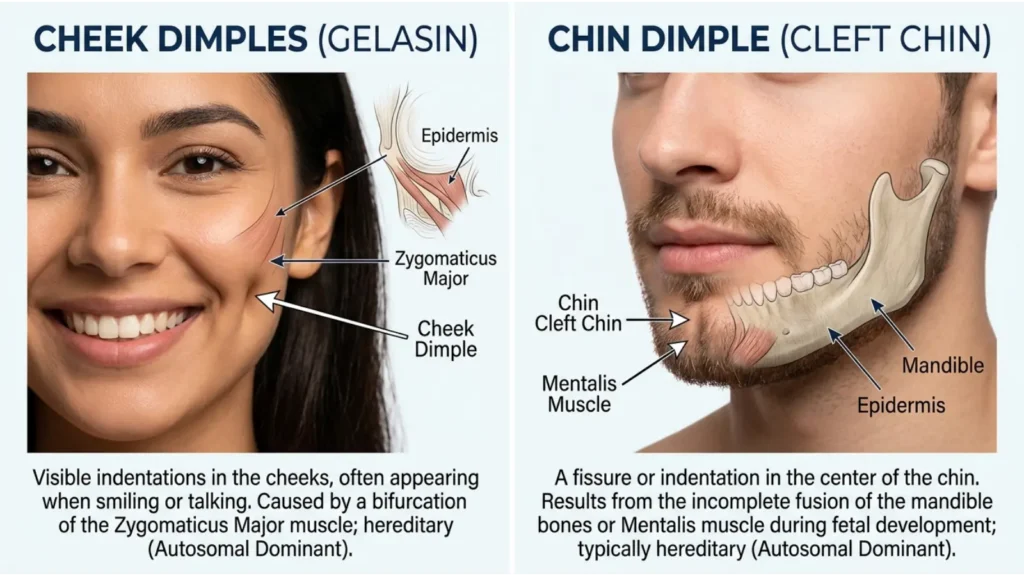
Dimples are small natural dents in the skin. They usually appear on the cheeks when a person smiles. Some people also have chin dimples. These features form because of slight changes in facial muscles and skin structure.
Dimples are not a health condition. They are just a normal facial variation. Many people find them attractive and unique.
Are Dimples Dominant or Recessive in Genetics?
The main question is: are dimples dominant or recessive?
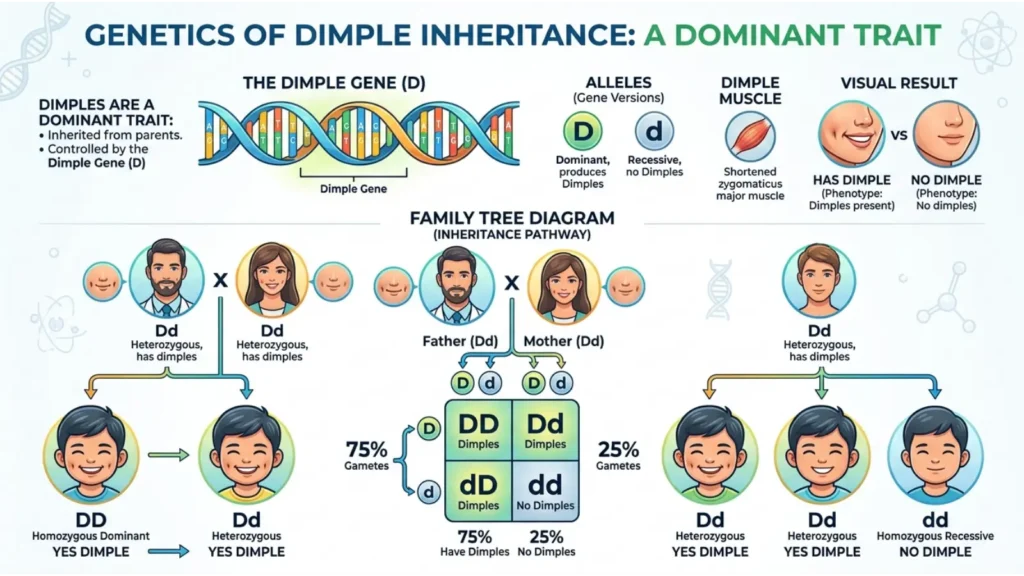
Most genetics studies suggest that dimples are a dominant trait. This means:
- If one parent has the dimple gene, the child may inherit it
- The gene does not need both parents to be present
- The trait can appear in every generation
However, modern science shows dimples are not purely simple. They may involve multiple genes (polygenic inheritance). That means inheritance is more complex than classic dominant or recessive rules.
So the correct answer is:
👉 Dimples are mostly dominant but not strictly Mendelian.
How Do Dimples Form? (Simple Biology)
Dimples form due to differences in facial muscle structure. The main muscle involved is the zygomaticus major muscle.
Here is how it works:
- The muscle may split or shorten slightly
- This creates a small inward pull on the skin
- When you smile, the skin folds inward
- A visible dimple appears
Some people are born with this muscle variation, while others are not.

Dominant vs Recessive Traits
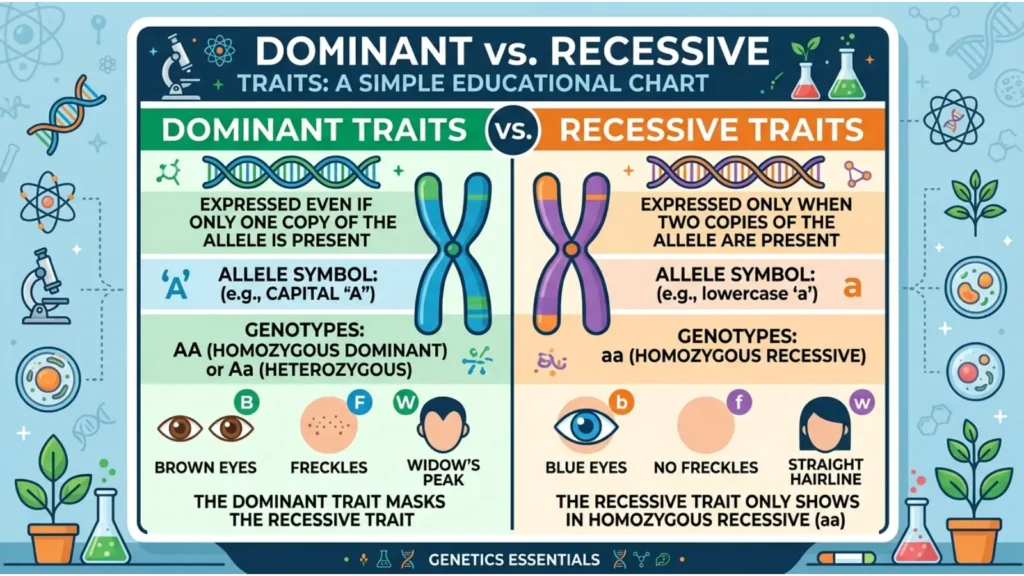
To understand are dimples dominant or recessive, you must know basic genetics.
Dominant Trait:
- Only one gene copy is needed
- Appears more often
- Example: dimples (mostly)
Recessive Trait:
- Needs two gene copies (one from each parent)
- May skip generations
- Example: blue eyes (in some cases)
Dimples usually behave like a dominant trait but not always in a predictable way.
Comparison Table: Dominant vs Recessive Traits in Dimples
| Feature | Dominant Trait | Recessive Trait |
| Gene Requirement | One copy | Two copies |
| Appearance | More common | Less common |
| Inheritance | Can appear in each generation | May skip generations |
| Dimples Example | Mostly yes | Rare cases possible |
| Predictability | Moderate | Low |
Types of Dimples
Dimples are not all the same. There are different types:
1. Cheek Dimples
- Most common type
- Appears on one or both cheeks
- Visible when smiling
2. Chin Dimples
- Known as cleft chin
- Appears in the center of the chin
- Can be deep or shallow
3. Facial Expression Dimples
- Temporary dimples
- Appear only during smiling or facial movement
Each type may have a slightly different genetic influence.
Genetic Factors Behind Dimples
When studying are dimples dominant or recessive, genetics plays a key role.
Key factors include:
- Parental inheritance
- Muscle structure genes
- Facial bone development
- Ethnic background
- Random genetic variation
Scientists still study how multiple genes interact to create dimples.
Real-Life Examples of Dimple Inheritance
Here are simple examples:
- If one parent has dimples → child may or may not have them
- If both parents have dimples → higher chance for child
- If neither parent has dimples → child usually does not have them
This shows that inheritance is not 100% predictable.
Common Myths About Dimples
Many people believe incorrect things about dimples.
Myth 1: Only dominant genes control dimples
✔ Reality: Multiple genes may influence dimples
Myth 2: Both parents must have dimples
✔ Reality: One parent is enough in many cases
Myth 3: Dimples are permanent in everyone
✔ Reality: Some dimples appear only when smiling
Myth 4: Dimples always skip generations
✔ Reality: Not always true

Common Mistakes People Make
When learning are dimples dominant or recessive, people often make mistakes:
- Thinking it is a simple single-gene trait
- Assuming inheritance is guaranteed
- Confusing chin dimples with cheek dimples
- Ignoring genetic variation
- Over-simplifying biology
Understanding genetics helps avoid these errors.
Tips to Understand Dimple Inheritance Better
Here are simple tips:
- Learn basic dominant and recessive concepts
- Study family traits across generations
- Understand that genes work in combinations
- Remember that appearance can vary
- Do not expect exact predictions
Genetics is always more complex than it looks.
Usage in Daily Life
Dimples do not affect health, but they matter in:
- Facial appearance
- Personality perception
- Photography and expressions
- Social attraction studies
- Genetics education
Many people simply enjoy having dimples as a unique feature.
Expert Insight (EEAT Section)
Genetics experts agree that dimples are not controlled by a single simple gene rule. While older studies label dimples as a dominant trait, modern research shows more complexity. Facial traits often involve multiple genes working together.
Understanding are dimples dominant or recessive helps students learn basic inheritance patterns. It also shows how human traits are unique and varied. This topic is useful in biology education and helps explain how small genetic differences shape appearance.
The key takeaway from experts is simple:
👉 Dimples are mostly dominant but influenced by multiple genetic factors.
FAQs: Are Dimples Dominant or Recessive?
1. Are dimples always dominant?
No, dimples are mostly dominant but not always guaranteed.
2. Can two parents without dimples have a child with dimples?
It is rare, but small genetic variations may allow it.
3. Are cheek dimples genetic?
Yes, cheek dimples are mainly influenced by genes.
4. Do dimples come from mother or father?
They can come from either parent.
5. Are dimples permanent?
Some dimples are permanent, while others appear only when smiling.
6. Can dimples disappear with age?
Yes, in some cases facial changes can reduce their visibility.
7. Is a dimple a mutation?
Not exactly. It is a normal genetic variation.
Conclusion
So, are dimples dominant or recessive? The simple answer is that dimples are mostly a dominant genetic trait. However, modern science shows that inheritance is not fully simple. Multiple genes and facial structures also affect dimple formation.
Dimples may appear if one parent carries the gene, but it is not always certain. Genetics plays a complex role in shaping human features. That is why some people have dimples and others do not, even in the same family.
In short, dimples are a beautiful example of how genetics works in real life. They show that inheritance is not always predictable, but always fascinating.