
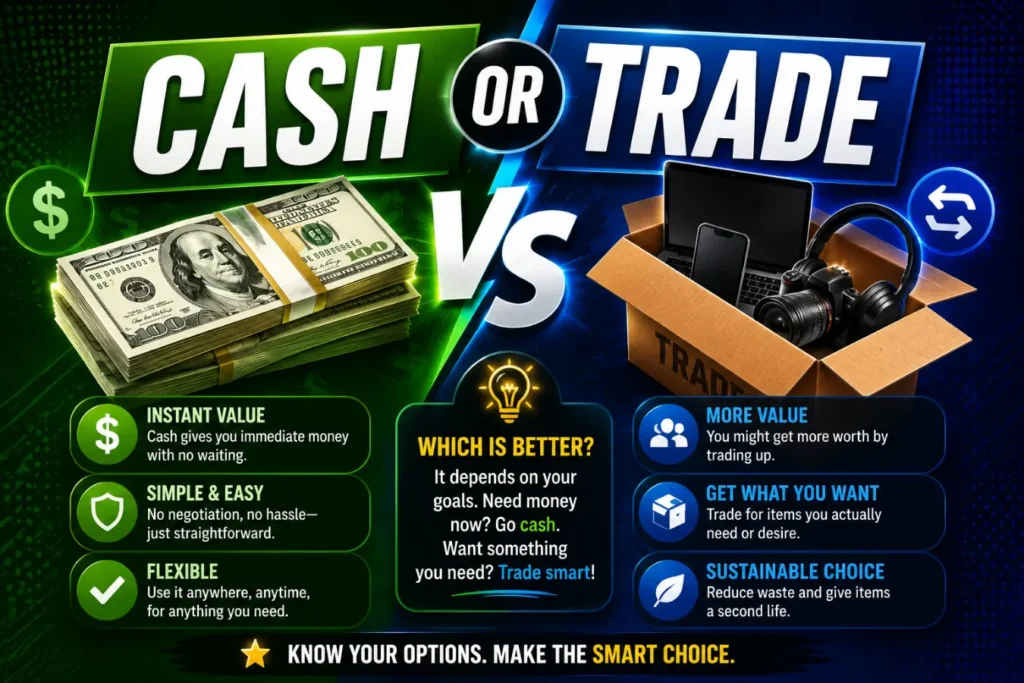
Cash or trade is a common choice when people buy, sell, or exchange items. You may see this option in online marketplaces, local classified ads, ticket exchanges, and community groups. While cash offers a simple payment method, trading allows people to exchange goods without spending money.
Both options have advantages and disadvantages. Therefore, understanding how each one works can help you make smarter decisions. In some situations, cash provides flexibility and convenience. In others, a trade can create value for both parties.
Whether you are selling concert tickets, trading collectibles, exchanging electronics, or making local deals, knowing when to choose cash or trade matters. This guide explains the differences, benefits, risks, and best practices so you can decide which option fits your needs.
Quick Summary Box
- Cash means paying or receiving money directly.
- Trade means exchanging one item or service for another.
- Cash offers flexibility and simple transactions.
- Trading can save money and reduce spending.
- Both options have benefits and risks.
- The best choice depends on your goals.
- Always verify item value before trading.
- Safe transactions help prevent scams.
What Does Cash or Trade Mean?
Cash or trade refers to two ways of completing a transaction.
Cash
One person pays money for an item or service.
Trade
Two people exchange items or services instead of money.
Examples include:
- Selling a bicycle for cash
- Trading a phone for a tablet
- Exchanging services between businesses
Both methods help people obtain what they need.
How Does a Cash Transaction Work?
A cash transaction is straightforward.
The process usually follows these steps:
- Buyer agrees on a price.
- Buyer pays money.
- Seller provides the item.
- Transaction ends.
Cash transactions are popular because they are simple and fast.
Many people prefer them for everyday purchases.
How Does a Trade Transaction Work?
A trade transaction involves exchanging value without direct payment.
For example:
- A person trades a guitar for a bicycle.
- A graphic designer exchanges services for website development.
- Collectors swap valuable items.
Both parties must agree on the value of the exchange.
That makes trading more complex than cash payments.
Cash vs Trade Comparison Table
| Feature | Cash | Trade |
| Uses money | Yes | No |
| Easy to understand | Yes | Moderate |
| Requires value comparison | No | Yes |
| Transaction speed | Fast | Slower |
| Negotiation needed | Sometimes | Often |
| Flexibility | High | Moderate |
| Saves money | No | Potentially |
| Popular for local sales | Yes | Yes |
This table highlights the key differences between the two options.

Why People Choose Cash
Cash remains one of the most common payment methods.
Immediate Value
Money can be used anywhere.
Simple Transactions
Cash deals usually require less negotiation.
Greater Flexibility
You can spend money on whatever you want.
Easier Pricing
The value is clear and measurable.
Because of these benefits, many sellers prefer cash.
Why People Choose Trade
Trading offers unique advantages.
Save Money
You exchange items instead of spending cash.
Reduce Waste
Unused items gain new value.
Access New Products
Trading can help you obtain needed items.
Create Mutual Benefits
Both parties may benefit from the exchange.
For these reasons, trading remains popular in many communities.
Real-Life Examples of Cash Transactions
Cash transactions happen every day.
Selling Furniture
A homeowner sells a sofa for cash.
Yard Sales
Customers purchase items directly with money.
Local Marketplace Sales
A seller receives cash for used electronics.
Business Transactions
Companies receive payment for products and services.
These examples show the simplicity of cash deals.
Real-Life Examples of Trade Transactions
Trading occurs in many situations.
Trading Video Games
Two friends exchange games they no longer play.
Swapping Electronics
Someone trades a laptop for a tablet.
Service Exchanges
A photographer trades services with a web designer.
Collectible Trading
Collectors exchange sports cards or memorabilia.
These examples highlight the flexibility of trading.
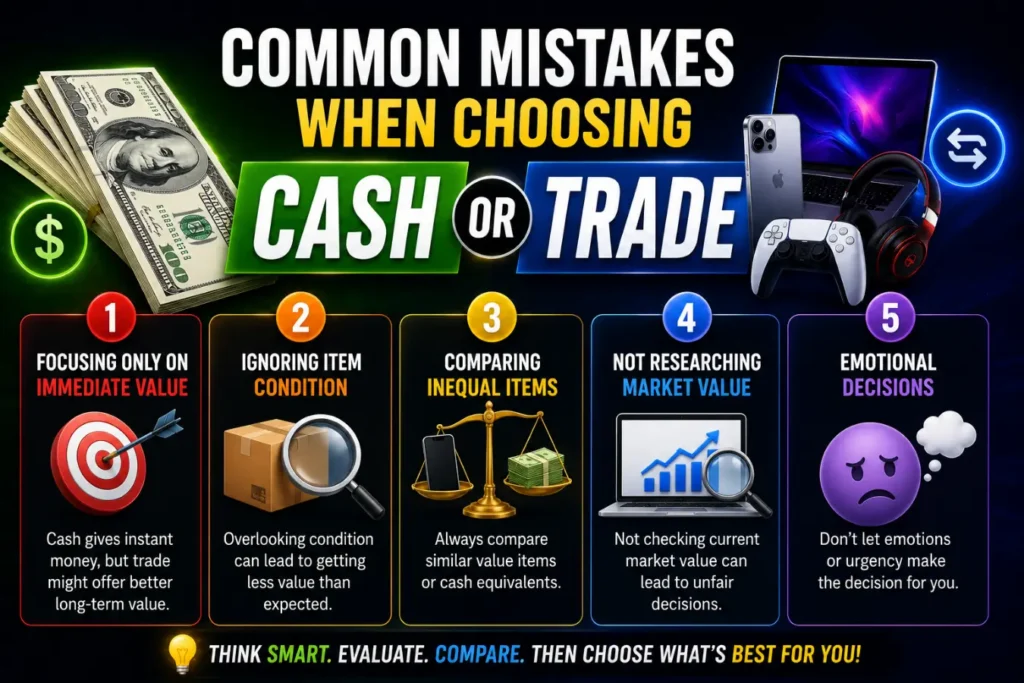
Common Mistakes When Choosing Cash or Trade
People often make avoidable errors.
Not Researching Value
Always know the worth of your item.
Accepting Unequal Trades
Compare market values carefully.
Rushing Transactions
Take time to evaluate the deal.
Ignoring Safety Precautions
Meet in safe public places.
Failing to Document Agreements
Written records can prevent disputes.
Avoiding these mistakes leads to better outcomes.
When Cash Is the Better Choice
Cash often works best when:
- You need money quickly.
- Item value is clear.
- You want flexibility.
- You plan future purchases.
- You prefer simple transactions.
Many sellers choose cash for convenience.
When Trade Is the Better Choice
Trading may work better when:
- You want to avoid spending money.
- Both parties have valuable items.
- You need a specific product.
- Cash is limited.
- Mutual benefits exist.
A good trade can create value for everyone involved.
Tips for Successful Cash Transactions
Follow these simple tips.
Verify Payment
Confirm cash amounts carefully.
Meet Safely
Choose public locations.
Keep Records
Save receipts when possible.
Know Market Value
Research pricing beforehand.
Be Clear About Terms
Communicate expectations clearly.
These habits reduce transaction problems.
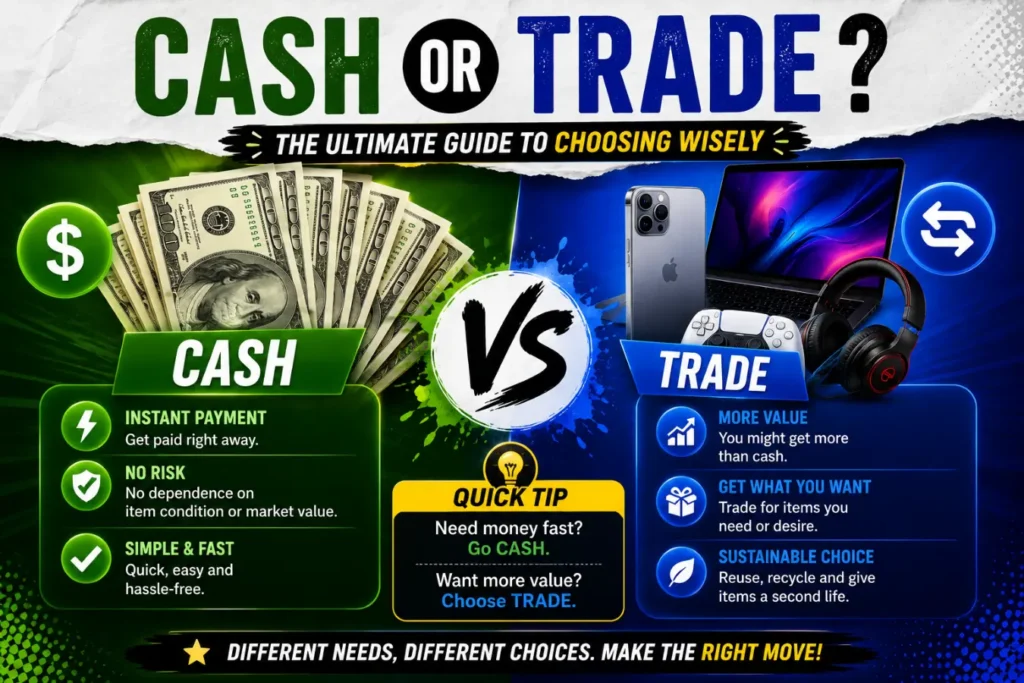
Tips for Successful Trade Transactions
Trading requires extra attention.
Compare Values
Research both items carefully.
Inspect Products
Check quality before agreeing.
Communicate Clearly
Discuss expectations openly.
Create a Written Agreement
Simple documentation helps avoid confusion.
Stay Flexible
Negotiation often improves results.
These steps increase the chances of a fair trade.
Cash or Trade in Daily Life
People use both methods regularly.
Common situations include:
- Online marketplaces
- Community groups
- Ticket exchanges
- Vehicle transactions
- Collectible markets
- Local buying and selling
Understanding both options gives you greater flexibility.
Expert Insights on Cash or Trade
Financial and marketplace experts recommend evaluating your goals before choosing cash or trade.
Cash provides immediate value and purchasing power. Therefore, it works well for most transactions. Trading, however, can unlock value from unused items and reduce spending.
Experts also suggest researching market prices before making decisions. Whether you choose cash or trade, understanding value remains the key to a successful deal.
Careful planning often leads to better financial outcomes.
Synonyms and Related Terms
People searching for this topic may also look for:
- Buy or trade
- Barter system
- Cash transaction
- Item exchange
- Product swap
- Direct trade
- Marketplace trading
- Value exchange
- Trade-in option
- Peer-to-peer exchange
Frequently Asked Questions
What does cash or trade mean?
It means choosing between money payment and exchanging items or services.
Is cash better than trade?
It depends on your goals and the value involved.
Can trading save money?
Yes. Trading may reduce or eliminate spending.
Is trading legal?
Yes, as long as both parties follow local laws.
How do I know if a trade is fair?
Research the value of both items.
Why do sellers prefer cash?
Cash provides immediate and flexible value.
What is a barter trade?
A barter trade exchanges goods or services without money.
Should I document a trade agreement?
Yes. Written records help prevent misunderstandings.
Conclusion
The decision between cash or trade depends on your needs, goals, and the value involved. Cash offers simplicity, flexibility, and immediate purchasing power. It remains the preferred option for many buyers and sellers because transactions are quick and straightforward.
Trading, however, can provide excellent value when both parties benefit from the exchange. It helps reduce spending, gives new life to unused items, and creates opportunities that cash transactions may not offer.
Before choosing cash or trade, research values, inspect items carefully, and communicate clearly. By understanding the strengths and weaknesses of both options, you can make smarter decisions and complete safer, more successful transactions.