Dammit or damnit is a common spelling question that many English learners and native speakers ask. You may have seen both versions in books, movies, social media posts, and text messages. As a result, it can be confusing to know which one is correct.
The good news is that both spellings exist, but they are not equally accepted. One spelling appears more often in dictionaries and formal writing, while the other is mostly used in casual communication.
Understanding the difference can help you write with more confidence. It can also prevent spelling mistakes in school assignments, blog posts, emails, and creative writing.
In this guide, you will learn the meaning of dammit and damnit, which spelling is considered standard, real-life examples, common mistakes, and expert grammar tips.
Quick Summary Box
- Dammit is the standard and widely accepted spelling.
- Damnit is a common alternative spelling.
- Both words express frustration, anger, or annoyance.
- Most dictionaries list dammit as the preferred form.
- Dammit comes from the phrase “damn it.”
- Damnit appears mainly in informal writing.
- Use dammit in most situations.
- Both spellings have the same meaning.
What Does Dammit Mean?
Dammit is an informal exclamation.
People use it to show:
- Frustration
- Disappointment
- Anger
- Annoyance
- Surprise
The word comes from the phrase:
“Damn it.”
Over time, many people combined the words into a single expression.
Examples:
- Dammit, I forgot my keys.
- Dammit, the computer stopped working.
- Dammit, I missed the bus.
The word often appears in spoken English and casual writing.
Dammit or Damnit? The Simple Answer
The simple answer is:
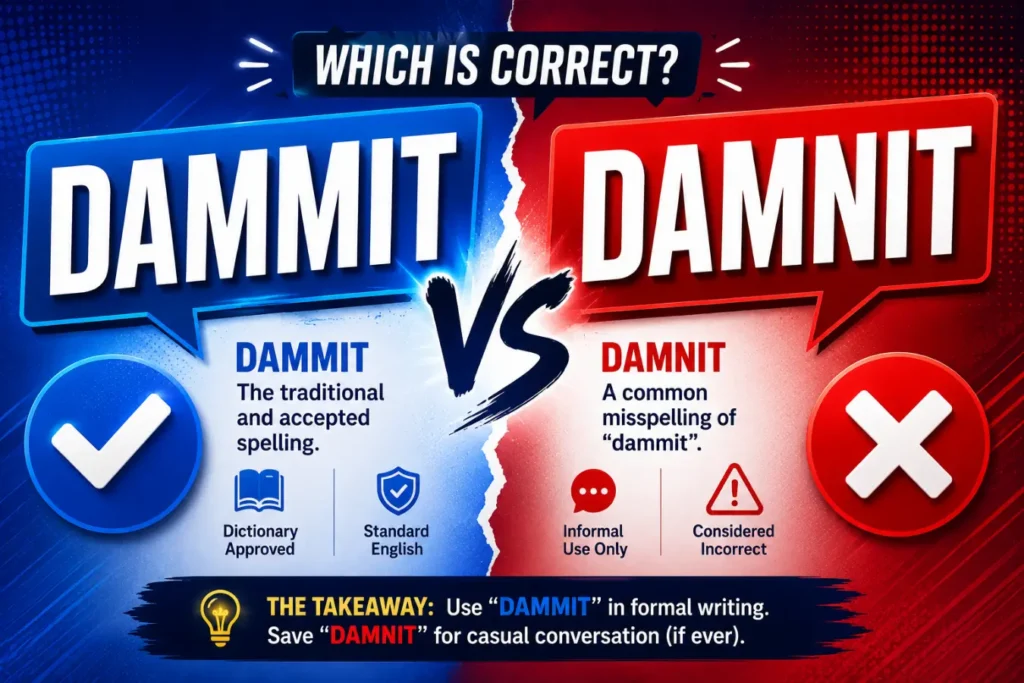
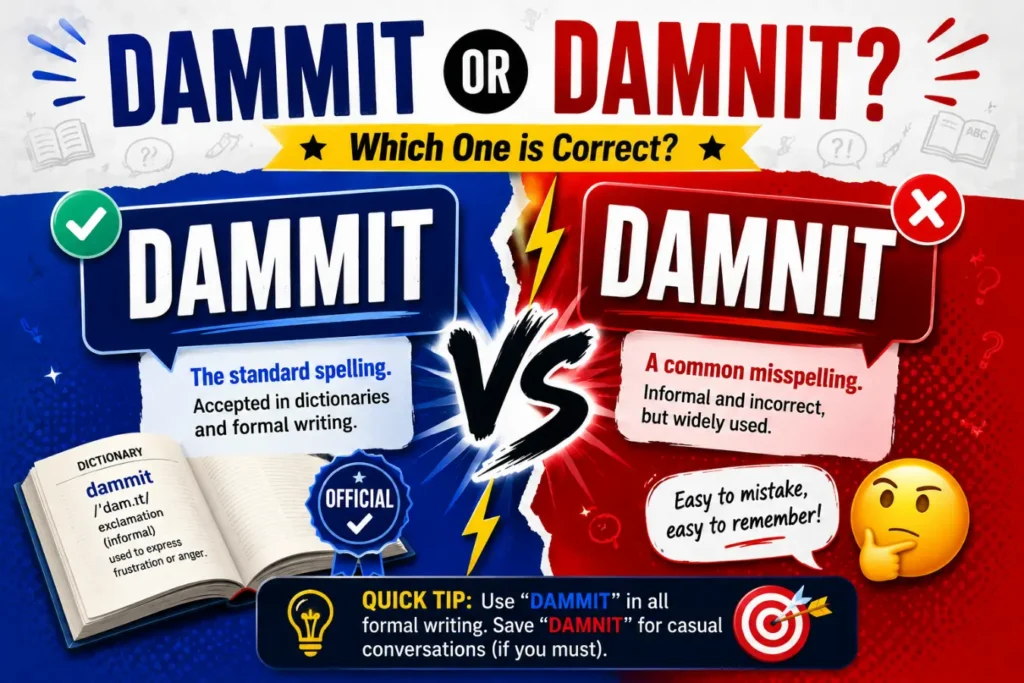
Dammit is the standard spelling.
Most dictionaries and language references recognize dammit as the preferred version.
However, many people also write:
Damnit
Although damnit is common online and in informal conversations, it appears less often in formal sources.
Therefore, if you want the safest choice, use dammit.

Why Do People Spell It as Damnit?
The alternative spelling comes from pronunciation.
Many English speakers pronounce the word like:
“dam-nit”
As a result, some writers spell it exactly as they hear it.
This creates the variation:
- Dammit
- Damnit
Both represent the same spoken expression.
However, pronunciation does not always determine standard spelling.
Dammit vs Damnit Comparison Table
| Feature | Dammit | Damnit |
| Standard spelling | Yes | No |
| Dictionary recognition | Widely accepted | Limited |
| Formal writing | Better choice | Usually avoided |
| Casual writing | Common | Common |
| Meaning | Same | Same |
| Pronunciation | Same | Same |
| Social media usage | Frequent | Frequent |
| Recommended spelling | Yes | No |
The table shows why most writers choose dammit.
The Origin of Dammit
The word dammit developed from:
Damn + it
People often say “damn it” when something goes wrong.
Over time, the phrase became a single word in informal English.
Examples include:
- Dammit!
- Gosh darn it!
- Shoot!
Language naturally changes as people speak and write.
That process helped create the word dammit.
Is Damnit Wrong?
Not exactly.
Damnit is not considered completely wrong.
Many people use it in:
- Text messages
- Social media posts
- Online comments
- Informal conversations
However, most grammar experts prefer dammit.
Therefore, dammit remains the safer option for general writing.
When Should You Use Dammit?
Use dammit when expressing frustration or disappointment.
Examples:
At Home
- Dammit, I dropped my phone.
At Work
- Dammit, I deleted the file.
During Sports
- Dammit, we lost the game.
In Creative Writing
- “Dammit!” he shouted.
The word works best in informal situations.
Real-Life Examples of Dammit and Damnit
Here are examples of both spellings.
Dammit Examples
- Dammit, I forgot the meeting.
- Dammit, my internet stopped working.
- Dammit, I spilled coffee on my shirt.
Damnit Examples
- Damnit, I missed the train.
- Damnit, I lost my wallet.
- Damnit, the app crashed again.
The meaning stays the same in both cases.
Common Mistakes People Make
Many writers make simple errors with these words.
Using Damnit in Formal Writing
Formal documents usually favor dammit.
Confusing It With “Damn It”
Remember that dammit comes from “damn it.”
Overusing the Expression
Too many exclamations can weaken writing.
Using It in Professional Emails
The word may sound unprofessional.
Avoid these mistakes for clearer communication.
Dammit in Everyday Communication
People commonly use dammit in daily life.
Examples include:
- Texting friends
- Social media posts
- Casual conversations
- Online gaming chats
- Fiction writing
However, many workplaces and academic settings prefer more neutral language.
Always consider your audience.
Alternatives to Dammit
Sometimes you may want a softer expression.
Popular alternatives include:
- Darn it
- Shoot
- Oh no
- Good grief
- Rats
- Heck
- Oops
- Dang it
These options sound less strong.
Expert Insights on Dammit or Damnit
Language experts generally recommend using the most widely recognized spelling.
In this case, that spelling is:
Dammit
The word appears in dictionaries, published books, and many writing references.
While damnit remains popular online, it lacks the same level of acceptance.
For students, bloggers, and professionals, dammit offers the safest choice.
Consistency also matters. If you choose one spelling, use it throughout your writing.
Synonyms and Related Terms
People searching for this topic may also look for:
- Damn it spelling
- Dammit meaning
- Damnit meaning
- English interjections
- Expressions of frustration
- Informal exclamations
- Slang expressions
- Common spelling mistakes
- Grammar spelling guide
- Casual English phrases
Frequently Asked Questions
Is dammit or damnit correct?
Dammit is the standard and preferred spelling.
Do both words mean the same thing?
Yes. Both express frustration or annoyance.
Is damnit in the dictionary?
Some references mention it, but dammit appears more widely.
Which spelling should students use?
Students should generally use dammit.
Is dammit a bad word?
It is considered a mild swear word by many people.
Can I use dammit in professional writing?
It is usually best to avoid it in formal documents.
Why do people write damnit?
Many people spell the word based on pronunciation.
Is dammit short for “damn it”?
Yes. Dammit developed from the phrase “damn it.”
Conclusion
The debate over dammit or damnit comes down to spelling preferences and language conventions. Both versions carry the same meaning and express frustration, annoyance, or disappointment. However, dammit remains the standard spelling recognized by most dictionaries and grammar references.
Although damnit appears frequently online and in casual conversations, it is less common in formal writing. Therefore, writers who want the safest and most widely accepted option should choose dammit.
Understanding this small spelling difference can improve your writing and help you communicate more clearly. When in doubt, remember that dammit is the preferred form for most situations.