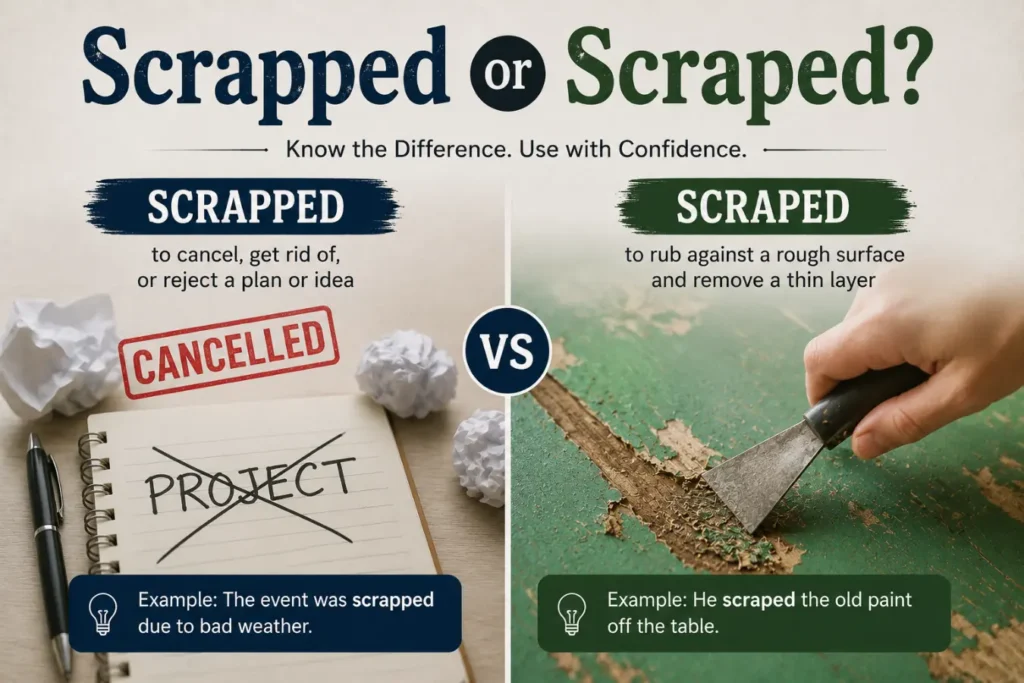
Scrapped or scraped is a common word pair that confuses many English learners and even native speakers. Although these words look almost identical, they have completely different meanings. Choosing the wrong one can change the meaning of your sentence. For example, a company can scrap a project, but a child can scrape a knee. Because the spellings differ by only one letter, people often mix them up while writing emails, reports, and social media posts. Fortunately, remembering the difference is easier than it seems. This guide explains both words in simple English, provides clear examples, and highlights common mistakes. You will also find a comparison table, memory tips, expert advice, and answers to popular questions. After reading this article, you will know exactly when to use scrapped and when to use scraped.
Quick Summary
- Scrapped means canceled, discarded, or thrown away.
- Scraped means rubbed, scratched, or removed by rubbing.
- The words have different meanings.
- Scrapped comes from the verb scrap.
- Scraped comes from the verb scrape.
- Always choose the word that matches your sentence.
- A simple memory trick helps avoid confusion.
What Does Scrapped Mean?
Scrapped is the past tense of scrap.
It means:
- Canceled
- Abandoned
- Discarded
- Thrown away
- Stopped completely
People often use scrapped when discussing plans, projects, vehicles, or ideas.
Example sentences
- The company scrapped the project.
- We scrapped our travel plans.
- They scrapped the old car.
- The team scrapped the original design.
In each example, something is no longer used.
What Does Scraped Mean?
Scraped is the past tense of scrape.
It means:
- Rubbed against a surface
- Removed by rubbing
- Lightly injured
- Collected with difficulty
Example sentences
- She scraped her knee while running.
- He scraped paint from the wall.
- We scraped the ice off the windshield.
- They scraped the last bit of cake from the bowl.
Each example involves rubbing or removing something.
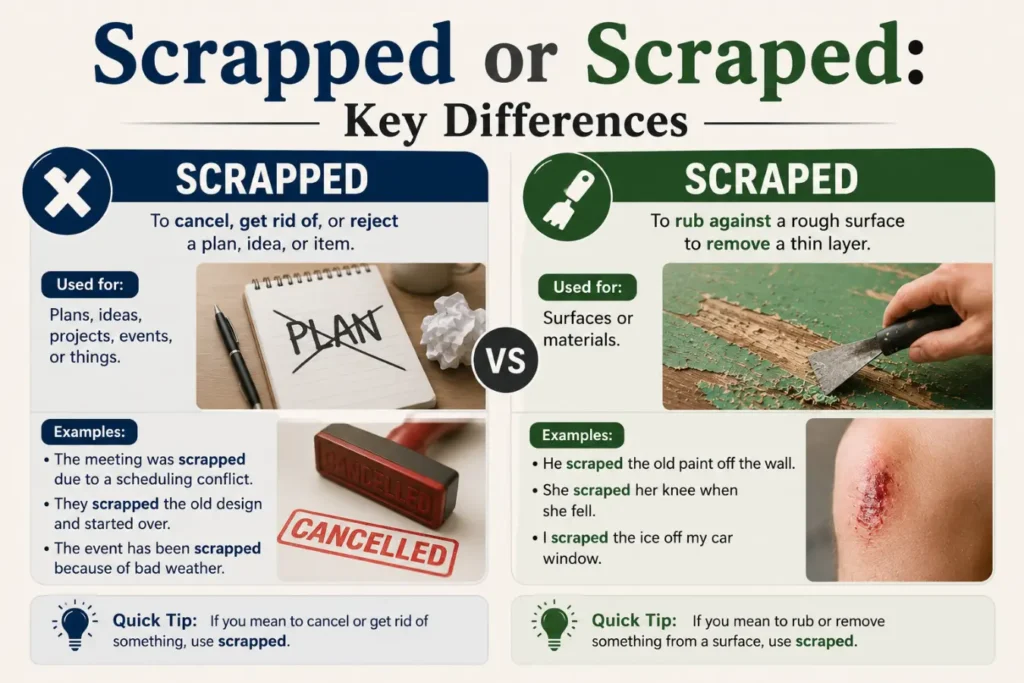
Scrapped or Scraped: Key Differences
Although the words look similar, they describe different actions.
| Feature | Scrapped | Scraped |
| Base verb | Scrap | Scrape |
| Main meaning | Canceled or discarded | Rubbed or scratched |
| Used for | Plans, projects, vehicles | Skin, surfaces, objects |
| Physical action | Usually no | Yes |
| Example | The event was scrapped. | He scraped his elbow. |
The comparison makes the distinction much easier to remember.
When Should You Use Scrapped?
Use scrapped when something ends or gets thrown away.
Common situations include:
- Canceling an event
- Ending a project
- Discarding an old machine
- Replacing outdated equipment
- Rejecting an idea
More examples
- The school scrapped the old timetable.
- Officials scrapped the proposal.
- She scrapped her first draft.
When Should You Use Scraped?
Use scraped when rubbing, scratching, or removing something.
Common situations include:
- Minor injuries
- Cleaning surfaces
- Removing food
- Removing paint
- Collecting small amounts
More examples
- He scraped mud from his boots.
- The cat scraped the furniture.
- I scraped my arm on the fence.
Real-Life Examples
These everyday situations make the difference clear.
Business
The company scrapped its expansion plan.
Cooking
She scraped the bowl clean.
School
The teacher scrapped the old lesson plan.
Sports
The player scraped his elbow during the game.
The meaning changes completely depending on the word you choose.
Common Mistakes to Avoid
Many writers confuse these words because their spellings look similar.
Incorrect
- The company scraped the project.
- I scrapped my knee.
- We scraped the old car.
Correct
- The company scrapped the project.
- I scraped my knee.
- We scrapped the old car.
Checking the context helps prevent these mistakes.
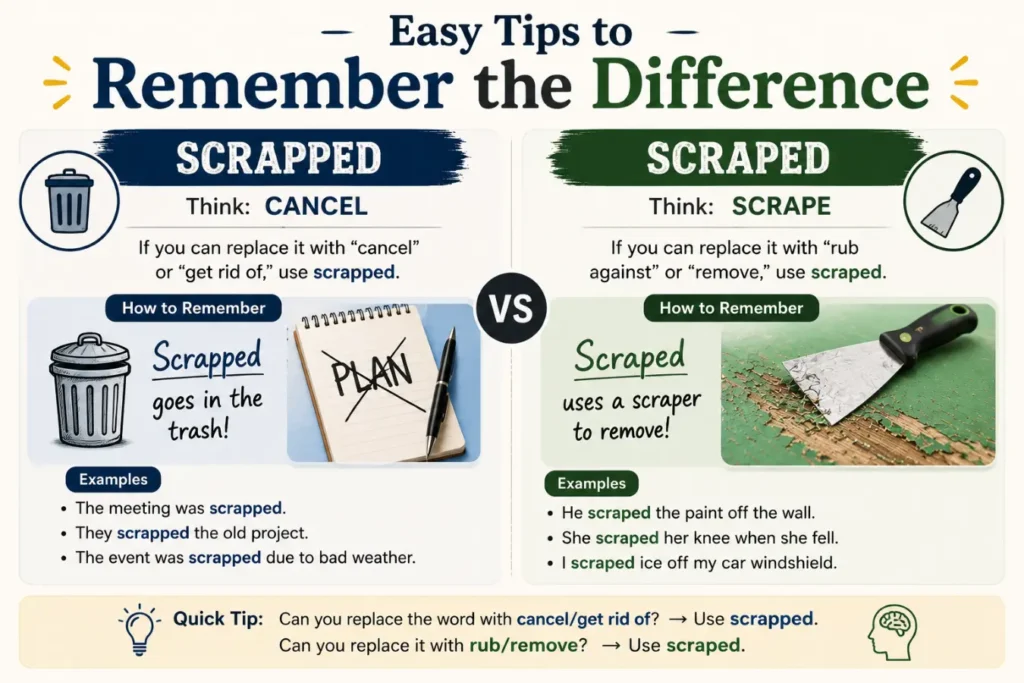
Easy Tips to Remember the Difference
These simple tricks make the words easier to remember.
- Scrapped relates to scrap metal or throwing something away.
- Scraped relates to scratching or rubbing.
- Think about whether something ends or gets rubbed.
- Read the sentence aloud before choosing.
A quick memory trick:
Plans get scrapped. Skin gets scraped.
How People Use These Words Every Day
You will hear these words in many situations.
People use scrapped when discussing:
- Business decisions
- School projects
- Construction plans
- Government programs
- Old vehicles
People use scraped when talking about:
- Minor injuries
- Cleaning
- Cooking
- Painting
- Car maintenance
Understanding the context makes choosing the correct word simple.
Synonyms of Scrapped and Scraped
Scrapped Synonyms
- Canceled
- Abandoned
- Discarded
- Eliminated
- Rejected
- Dropped
- Removed
Synonyms for Scraped
- Rubbed
- Scratched
- Shaved
- Cleared
- Removed
- Brushed
- Peeled
Choose the synonym that best fits your sentence.
Expert Insight
Many confusing English words differ by only one or two letters. Instead of memorizing spellings alone, focus on the action each word describes. Scrapped refers to stopping or discarding something. Scraped involves physical contact with a surface. Understanding the meaning behind each verb improves grammar, strengthens vocabulary, and reduces writing mistakes. This approach also makes proofreading much easier.
Frequently Asked Questions
Is it scrapped or scraped?
It depends on the meaning. Scrapped means canceled or discarded. Scraped means rubbed or scratched.
What does scrapped mean?
It means something was canceled, abandoned, or thrown away.
What does scraped mean?
It means something rubbed against a surface or was removed by rubbing.
Can you scrap your knee?
No. You scrape your knee.
Can a company scrape a project?
No. A company scraps a project.
Why do people confuse these words?
They have similar spelling but completely different meanings.
How can I remember the difference?
Remember this phrase:
Projects get scrapped. Knees get scraped.
Conclusion
Understanding scrapped or scraped becomes easy once you focus on the meaning instead of the spelling. Scrapped refers to canceling, abandoning, or discarding something, while scraped describes rubbing, scratching, or removing material from a surface. Although the words differ by only one letter, they belong in very different situations. Before choosing one, ask yourself whether the sentence talks about ending something or physically rubbing something. This simple question will help you make the correct choice every time. With regular practice and the memory tricks in this guide, you can confidently use both words in everyday conversations and professional writing.