Lite or light is a question many people ask when writing, speaking, or reading English. The two words look similar, and they often sound the same. However, they do not always have the same use.
In most situations, light is the standard English spelling. On the other hand, lite usually appears in product names, advertising, and branding. Because both words are common, many people feel unsure about which one to use.
The good news is that the difference is easy to understand. Once you learn the basic rule, you can choose the correct word with confidence.
In this guide, you will learn the meaning of each word, see real-life examples, compare their uses, and avoid common mistakes. By the end, you will know exactly when to use lite and when to use light.
Quick Summary Box
- Light is the standard English spelling.
- Lite is mainly used in branding and marketing.
- Use light in formal and everyday writing.
- Use lite when it is part of a product name.
- Both words may suggest something reduced or less heavy.
- When in doubt, choose light.
- Most grammar experts recommend light for regular writing.
What Does Light Mean?
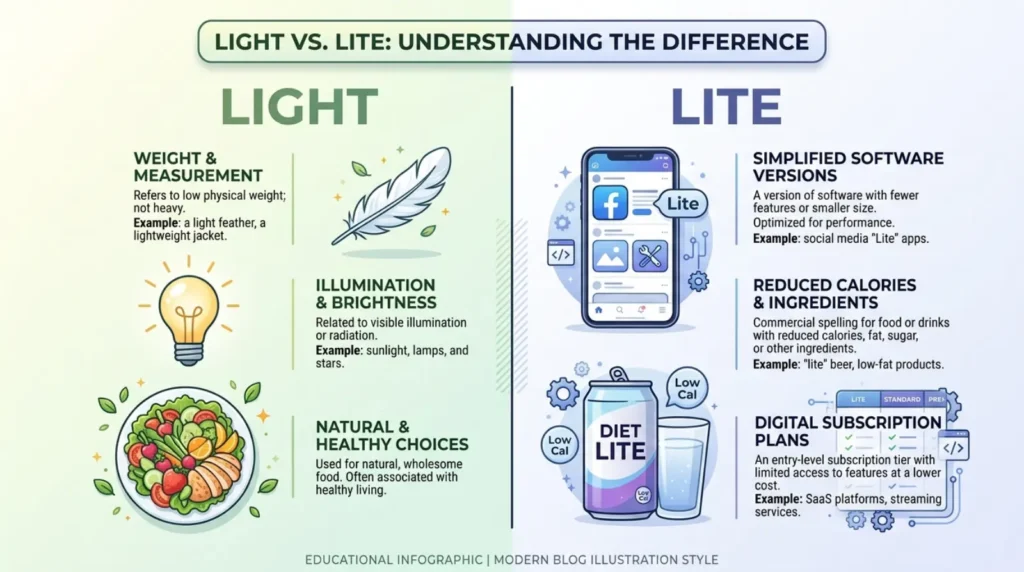
The word light has several meanings in English. Therefore, it appears in many different situations.
It can describe:
- Something that is not heavy
- Brightness from a lamp or the sun
- Food with fewer calories
- A soft or pale color
- A gentle amount of something
Examples of Light
- This backpack feels light.
- Please turn on the light.
- She ordered a light lunch.
- He painted the room light blue.
- The rain was light this morning.
As you can see, light has many uses in everyday language.
What Does Lite Mean?
Lite is an alternative spelling of light. However, people rarely use it in formal writing.
Instead, companies often use lite in marketing and branding. In many cases, it suggests that something contains less of a certain ingredient or has fewer features.
Examples of Lite
- Lite beer
- Lite dressing
- Lite version of an app
- Lite membership plan
As a result, consumers often associate the word with simplicity or reduced content.
Lite vs Light: Key Differences
Although the words look similar, they serve different purposes.
| Feature | Light | Lite |
| Standard English spelling | Yes | No |
| Formal writing | Yes | Rare |
| Academic writing | Yes | No |
| Product branding | Sometimes | Common |
| Marketing use | Limited | Very common |
| Everyday grammar | Preferred | Not preferred |
Quick Rule
Use light for normal writing.
Use lite only when referring to a brand, product, or marketing term.
Why Do Companies Use Lite?
Many businesses choose the word lite because it looks modern and simple. In addition, it quickly tells customers that a product may contain less of something.
For example, a company may offer:
- Lite beer
- Lite yogurt
- Lite software
- Lite subscription plans
Because of this marketing effect, the spelling became popular in advertisements.
However, the word still remains less common in formal English.

Real-Life Examples of Light
The word light appears in many parts of daily life.
Weight
- This suitcase is light.
- The package feels light.
Brightness
- The room needs more light.
- Sunlight entered through the window.
Food
- I prefer a light breakfast.
- She chose a light snack.
Colors
- Light green
- Light yellow
- Light gray
In all these examples, light is the correct choice.
Real-Life Examples of Lite
The word lite often appears on products and services.
Food Products
- Lite milk
- Lite mayonnaise
- Lite salad dressing
Technology Products
- Lite browser
- Lite mobile app
- Lite software version
Membership Plans
- Lite package
- Lite subscription
- Lite account
Therefore, you will usually see lite in commercial settings.
Lite or Light in Food Labels
Food labels often create confusion. Nevertheless, the difference is usually simple.
Light Foods
A light food product may contain:
- Fewer calories
- Less fat
- Reduced sugar
Lite Foods
Many brands choose the word lite for marketing purposes.
For example:
- Lite dressing
- Lite beer
- Lite snacks
In most cases, the meaning is similar. However, the spelling often depends on the company’s branding choice.

Lite or Light in Technology
Technology companies frequently use lite. For example, many apps offer Lite versions for users with limited storage.
As a result, these apps often load faster and use fewer resources.
Common examples include:
- Lite browser
- Lite app
- Lite software package
However, light is less common in software branding.
When Should You Use Light?
Use light in most writing situations.
For example, use it in:
- Blog posts
- Emails
- School assignments
- Reports
- Articles
- Business documents
Correct Examples
The bag is light.
We enjoyed a light meal.
The room was full of natural light.
Because these examples follow standard English rules, they sound natural and professional.
When Should You Use Lite?
Use lite when it is part of a brand name or product title.
Correct Examples
I downloaded the Lite version of the app.
The store sells Lite Beer.
The company introduced a Lite package.
Before choosing a spelling, always check whether the term is part of a product name.
Common Mistakes People Make
Many writers confuse these two words. Fortunately, these mistakes are easy to avoid.
Mistake 1: Using Lite in Formal Writing
❌ The backpack is lite.
✅ The backpack is light.
Mistake 2: Replacing Every Light With Lite
❌ Please switch on the lite.
✅ Please switch on the light.
Mistake 3: Ignoring Product Names
❌ I downloaded the Light version.
✅ I downloaded the Lite version.
For this reason, always pay attention to the context.
Tips to Remember the Difference
You can remember the difference with a simple trick.
Easy Memory Rule
Light = Language
Use it in normal English writing.
Lite = Label
Use it when talking about products and brands.
Another Simple Rule
- Writing for school or work? Use light.
- Talking about a product? Check whether the brand uses lite.
As a result, you will make fewer spelling mistakes.
Related Words
When learning about lite or light, you may also see these related words.
Similar Words
- Bright
- Soft
- Gentle
- Airy
- Lightweight
Expert Insight: Why the Difference Matters
Small spelling choices can affect how readers view your writing.
For example, using the correct word improves clarity and professionalism. In addition, it helps readers understand your message quickly.
Most language experts recommend using light unless a company officially uses lite.
Furthermore, correct spelling builds trust with readers. Because of this, writers should always choose the word that fits the situation.
Frequently Asked Questions
Is lite a real word?
Yes. Dictionaries recognize lite as an alternative spelling of light.
Which is correct, lite or light?
Both are correct. However, light is the standard spelling.
Why do companies use lite?
Companies use lite to suggest a simpler or reduced version of a product.
Is lite informal?
Yes. In most cases, it is more informal than light.
Can I use lite in academic writing?
No. Academic writing should use light instead.
Does lite always mean fewer calories?
No. Sometimes it means fewer features rather than fewer calories.
Is Facebook Lite correct?
Yes. In that case, Lite is part of the official product name.
Which spelling should I use?
When in doubt, use light. However, use lite when referring to a brand name.
Conclusion
Understanding lite or light is easier than many people think. Although the words look similar, they serve different purposes. In most situations, light is the correct spelling because it follows standard English rules. Therefore, it works best in articles, emails, reports, and everyday writing.
On the other hand, lite mainly appears in product names, advertisements, and marketing materials. Companies often use it to suggest a reduced, simpler, or lighter version of something.
The easiest rule to remember is simple: use light for regular language and lite for labels and brands. By following this guideline, you can avoid common mistakes and write with confidence. As a result, your writing will look clearer, more professional, and easier to understand.