

Hydrangea sun or shade is one of the most common questions gardeners ask. These beautiful flowering shrubs can thrive for many years when planted in the right location. However, too much sun can stress the plant, while too much shade can reduce blooms.
The good news is that most hydrangeas enjoy a balance of both sun and shade. The ideal amount depends on the variety, climate, and growing conditions. Therefore, understanding your hydrangea’s needs can help you grow bigger flowers and healthier plants.
In this guide, you will learn whether hydrangeas prefer sun or shade, how different varieties respond to light, common growing mistakes, and expert tips for success. By the end, you will know exactly where to plant hydrangeas for the best results.
Quick Summary Box
- Most hydrangeas prefer morning sun and afternoon shade.
- Too much shade can reduce flowering.
- Too much hot afternoon sun can damage leaves.
- Different hydrangea varieties have different light needs.
- Partial shade is ideal for many hydrangea types.
- Hydrangeas need consistent moisture in sunny locations.
- Climate affects how much sun a hydrangea can handle.
- The right balance of light improves blooms and growth.
What Is a Hydrangea?
A hydrangea is a flowering shrub known for its large, colorful blooms.
These plants are popular because they:
- Produce beautiful flowers
- Grow in many climates
- Add color to landscapes
- Work well in garden beds
- Attract pollinators
Hydrangeas come in several varieties, and each has slightly different sunlight needs.
Hydrangea Sun or Shade? The Simple Answer
The simple answer is:
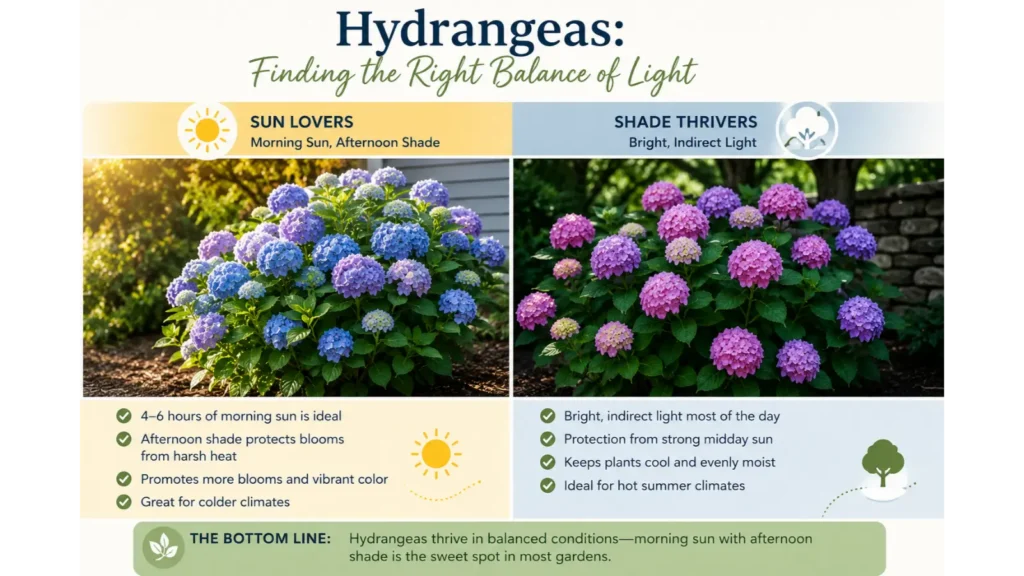
Most hydrangeas grow best in partial sun and partial shade.
They typically enjoy:
- 3–6 hours of morning sunlight
- Protection from intense afternoon heat
- Bright filtered light throughout the day
Morning sun helps produce flowers.
Afternoon shade helps prevent leaf scorch and dehydration.
This balance creates ideal growing conditions.
Why Light Matters for Hydrangeas
Sunlight affects nearly every part of a hydrangea’s growth.
Proper light helps:
- Increase flower production
- Improve plant health
- Strengthen stems
- Support root development
- Enhance flower color
Without enough sunlight, hydrangeas may produce fewer blooms.
With too much sunlight, leaves may wilt or burn.
Therefore, choosing the right location is important.
Hydrangea Sun vs Shade Comparison Table
| Growing Condition | More Sun | More Shade |
| Flower production | Higher | Lower |
| Growth rate | Faster | Slower |
| Water needs | Higher | Lower |
| Risk of leaf scorch | Higher | Lower |
| Bloom size | Often larger | Often smaller |
| Plant stress in heat | Higher | Lower |
| Best for hot climates | No | Yes |
| Best for cool climates | Yes | Sometimes |
The best results usually come from a balance of both.
How Different Hydrangea Varieties Handle Sun and Shade
Not all hydrangeas have the same preferences.
Bigleaf Hydrangea
Bigleaf hydrangeas prefer:
- Morning sun
- Afternoon shade
- Moist soil
Too much direct afternoon sun can damage leaves.
Panicle Hydrangea
Panicle hydrangeas tolerate more sunlight.
They often thrive in:
- Full sun
- Cooler climates
- Open landscapes
Oakleaf Hydrangea
Oakleaf hydrangeas prefer:
- Partial shade
- Filtered sunlight
- Woodland-style gardens
Smooth Hydrangea
Smooth hydrangeas enjoy:
- Partial sun
- Light shade
- Consistent moisture
Knowing your variety helps you choose the right location.
How Climate Affects Sun Exposure
Climate plays a major role in hydrangea care.
Cool Regions
Hydrangeas can handle more direct sunlight.
Extra sun often leads to stronger blooms.
Hot Regions
Hydrangeas need afternoon shade.
Intense heat can stress the plant quickly.
Humid Areas
Partial shade helps reduce moisture loss.
Dry Areas
Shade becomes even more important.
Therefore, gardeners should consider local weather conditions.
Signs Your Hydrangea Gets Too Much Sun
Hydrangeas often show clear signs of stress.
Watch for:
- Brown leaf edges
- Wilted leaves
- Dry soil
- Fading flower color
- Drooping stems
These symptoms often appear during hot afternoons.
Adding shade can help solve the problem.
Signs Your Hydrangea Gets Too Much Shade
Too much shade creates different issues.
Common signs include:
- Few flowers
- Weak growth
- Thin stems
- Small blooms
- Slow development
If your plant receives less than three hours of light, flowering may decrease.
A brighter location often improves performance.
Best Places to Plant Hydrangeas
Choosing the right location can make a big difference.
Ideal planting spots include:
- East-facing gardens
- Areas with morning sun
- Locations with afternoon shade
- Near fences that provide partial shelter
- Woodland garden edges
These areas provide the balance most hydrangeas need.
Real-Life Example of Successful Hydrangea Placement
Imagine two gardeners planting the same hydrangea.
The first gardener places it in full afternoon sun.
The plant wilts during summer heat.
The second gardener places it where it gets morning sun and afternoon shade.
The plant grows larger and produces more flowers.
This example shows why light balance matters.
Common Mistakes When Growing Hydrangeas
Many gardeners make simple mistakes.
Planting in Deep Shade
The plant may survive but produce fewer flowers.
Ignoring Climate Conditions
A location that works in one region may fail in another.
Not Watering Enough
Hydrangeas need moisture, especially in sunny spots.
Planting Against Hot Walls
Walls can reflect heat and increase stress.
Choosing the Wrong Variety
Some varieties handle sun better than others.
Avoiding these mistakes improves success.
Tips for Growing Healthy Hydrangeas
Follow these practical tips.
Give Morning Sun
Morning light is usually gentle and beneficial.
Provide Afternoon Protection
Shade reduces heat stress.
Keep Soil Moist
Hydrangeas prefer evenly moist soil.
Add Mulch
Mulch helps retain moisture.
Improve Soil Quality
Rich organic soil supports healthy growth.
Watch Seasonal Changes
Sun exposure changes throughout the year.
Small adjustments can lead to better blooms.
Hydrangeas in Daily Landscape Design
Hydrangeas work well in many garden settings.
Homeowners often use them:
- Along walkways
- Around patios
- Near fences
- In foundation plantings
- In cottage gardens
- In shaded landscape beds
Their versatility makes them a favorite landscaping plant.
Synonyms and Related Search Terms
People searching for this topic may also look for:
- Hydrangea sunlight requirements
- Do hydrangeas need sun
- Hydrangea growing conditions
- Partial shade plants
- Best place to plant hydrangeas
- Hydrangea care guide
- Hydrangea light requirements
- Can hydrangeas grow in shade
- Hydrangea full sun tolerance
- Growing hydrangeas successfully
Expert Insights on Hydrangea Sun and Shade
Professional gardeners often follow one simple rule:
Morning sun and afternoon shade provide the safest growing conditions for most hydrangeas.
This approach helps:
- Improve flowering
- Reduce heat stress
- Maintain healthy foliage
- Support root development
Experts also recommend matching the variety to your climate.
Doing so increases long-term success and bloom production.
Frequently Asked Questions
Do hydrangeas prefer sun or shade?
Most hydrangeas prefer a mix of sun and shade.
Can hydrangeas grow in full shade?
They can survive, but flowering often decreases.
Can hydrangeas tolerate full sun?
Some varieties can, especially panicle hydrangeas.
How many hours of sun do hydrangeas need?
Most need about 3–6 hours of sunlight daily.
Why are my hydrangea leaves turning brown?
Too much sun and heat often cause leaf scorch.
Will hydrangeas bloom in shade?
Yes, but bloom production may be lower.
Is morning sun enough for hydrangeas?
Yes. Morning sun is ideal for many varieties.
Where should I plant hydrangeas?
Choose a spot with morning sun and afternoon shade.
Conclusion
When it comes to hydrangea sun or shade, the best answer is usually both. Most hydrangeas perform best with morning sunlight and afternoon shade. This balance helps them produce beautiful flowers while avoiding heat stress.
The exact amount of sun depends on the variety and your climate. Panicle hydrangeas often tolerate more sun, while bigleaf hydrangeas appreciate extra shade. Paying attention to light conditions, soil moisture, and local weather can make a huge difference.
If you want healthier plants and larger blooms, choose a location that offers gentle morning light and protection from intense afternoon heat. With proper placement and care, your hydrangeas can thrive and provide stunning color year after year.