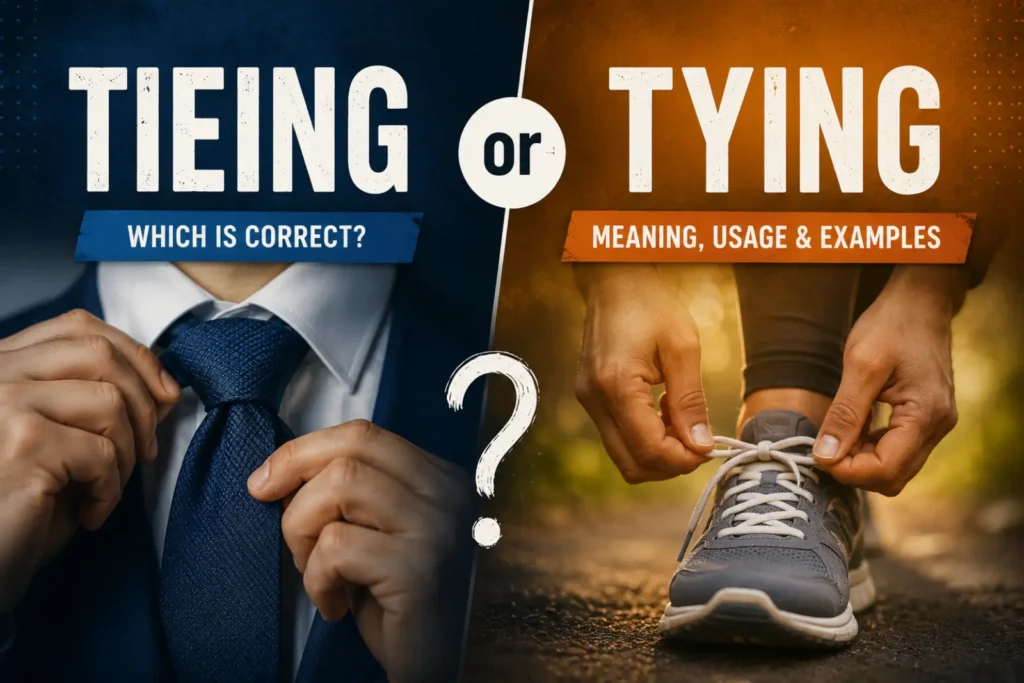
Tieing or tying is a question many writers ask when they spell the verb “tie.” At first glance, both versions seem correct. However, only one spelling follows standard English grammar rules.
English contains many words that change spelling when adding endings like “-ing.” This often creates confusion. As a result, students, professionals, and casual writers frequently search for the correct form.
Understanding the difference is easier than you might think. Once you learn the spelling rule, you can avoid mistakes in emails, school assignments, blog posts, and social media content.
This guide explains the correct spelling, why the confusion happens, common errors to avoid, and practical examples you can use right away.
Quick Summary Box
- Tying is the correct spelling.
- Tieing is generally considered incorrect.
- “Tying” comes from the verb “tie.”
- English spelling rules drop the “e” before adding “-ing.”
- Use “tying” in formal and informal writing.
- The same rule applies to many English verbs.
- Learning this pattern improves grammar accuracy.
Featured Snippet Answer
Is It Tieing or Tying?
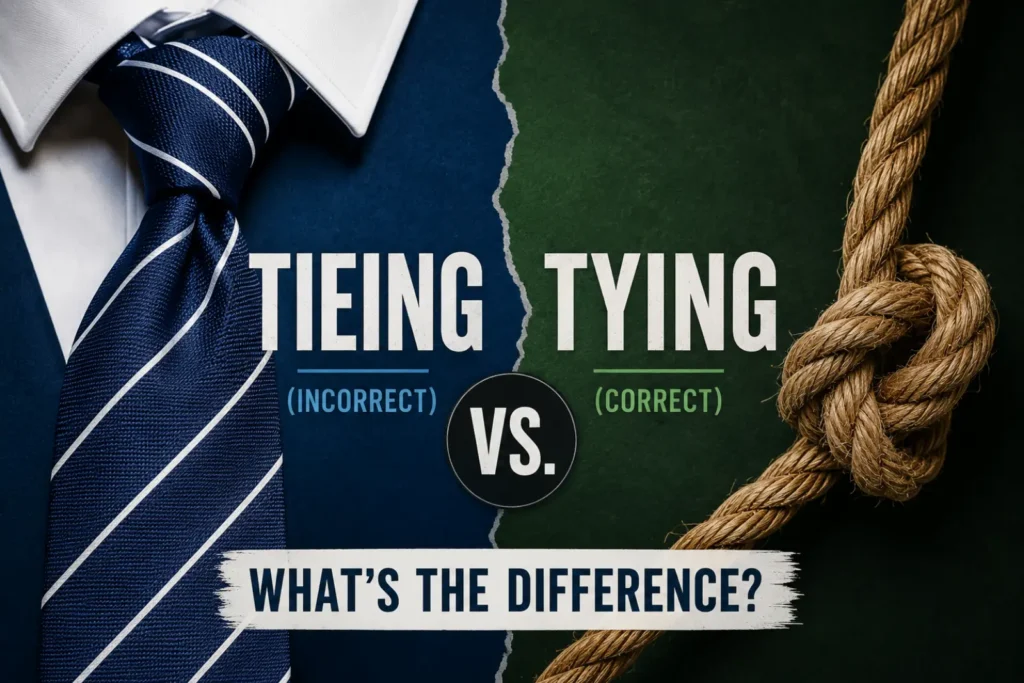
Tying is the correct spelling in modern English. When the verb “tie” changes to its present participle form, the final “e” drops and “-ing” is added. Therefore, “tying” is correct, while “tieing” is usually considered a spelling mistake.
What Does Tying Mean?
The word “tying” refers to fastening, connecting, securing, or binding something.
Examples include:
- Tying shoelaces
- Tying a knot
- Tying a ribbon
- Tying a package
The action involves joining or securing something using a cord, string, rope, or similar material.
Why Do People Confuse Tieing and Tying?
Many English learners expect a simple rule.
For example:
- Bake → Baking
- Drive → Driving
- Smile → Smiling
However, “tie” behaves differently.
Instead of becoming “tieing,” it changes to “tying.”
Because this pattern looks unusual, many people assume “tieing” must be correct.
The confusion comes from spelling expectations rather than grammar rules.
Tieing vs Tying Comparison Table
| Feature | Tieing | Tying |
| Standard English | No | Yes |
| Dictionary Approved | Rarely | Yes |
| Recommended for Writing | No | Yes |
| Used in Schools | No | Yes |
| Used in Business Writing | No | Yes |
| Accepted Grammar | No | Yes |
The table shows that “tying” is the preferred and accepted spelling.
The Grammar Rule Behind Tying
English spelling often changes when adding suffixes.
With the verb “tie,” the final “ie” changes to “y.”
Then “-ing” is added.
Formula
Tie → Tying
Other words follow the same pattern:
| Base Word | -ing Form |
| Die | Dying |
| Lie | Lying |
| Tie | Tying |
This rule helps maintain pronunciation and readability.
Examples of Tying in Everyday Sentences
Real-world examples make the rule easier to remember.
At Home
She is tying her shoes before school.
During Sports
The coach is tying the equipment securely.
At Work
He spent the afternoon tying bundles of documents.
During Travel
They were tying luggage tags onto their bags.
These examples show how naturally the word appears in daily communication.
Common Situations Where People Use “Tying”
The word appears in many settings.
Fashion
- Tying a necktie
- Tying a belt
Outdoor Activities
- Tying fishing knots
- Tying camping ropes
Gift Wrapping
- Tying decorative ribbons
- Tying bows
Household Tasks
- Tying garbage bags
- Tying packages
Because the action is common, correct spelling matters.
Frequent Spelling Mistakes Related to Tying
Many writers make similar errors.
Mistake #1: Writing Tieing
This is the most common mistake.
Mistake #2: Adding Extra Letters
Some people write:
- Tyeing
- Tyeing
These forms are incorrect.
Mistake #3: Overthinking the Rule
Writers sometimes assume longer spellings look more professional.
In reality, “tying” is the standard form.
Simple is correct.
Easy Tricks to Remember the Correct Spelling
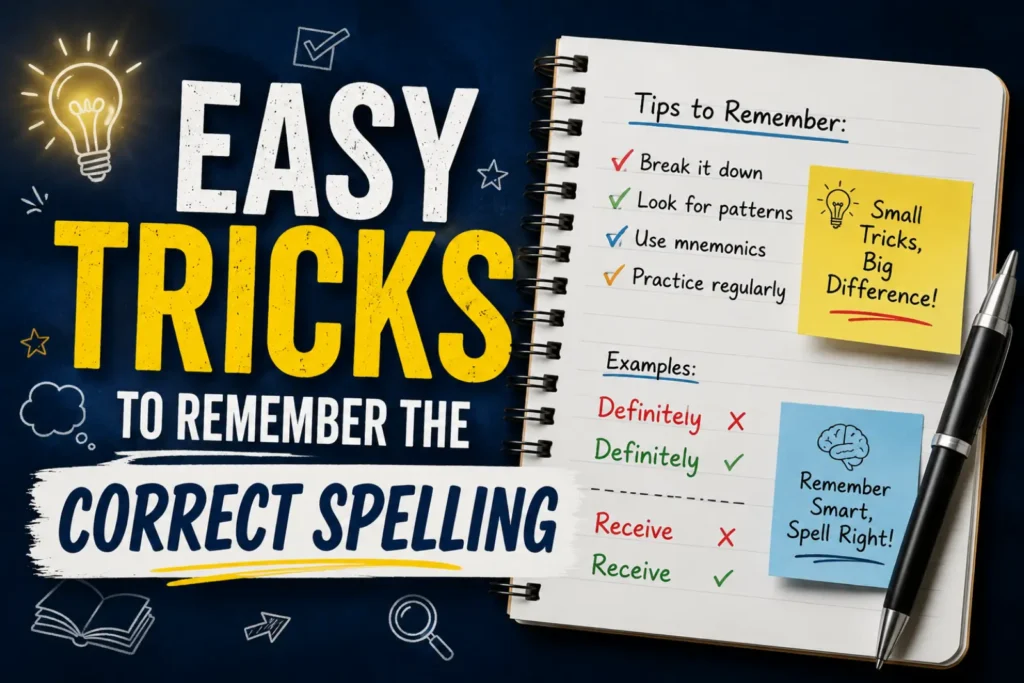
Memory tricks can help.
Think of Similar Words
- Die → Dying
- Lie → Lying
- Tie → Tying
Remember the Pattern
The “ie” changes into “y.”
Read It Aloud
“Tying” sounds natural.
“Tieing” often looks awkward when read carefully.
These shortcuts help prevent future mistakes.
Tying in Academic and Professional Writing
Correct spelling affects credibility.
Teachers notice grammar mistakes in assignments.
Employers notice spelling mistakes in reports and emails.
Using “tying” correctly shows attention to detail.
This becomes especially important when writing:
- Business documents
- Website content
- Job applications
- Marketing materials
- Academic papers
Small grammar improvements can strengthen overall writing quality.
Similar Grammar Rules You Should Know
Many English words follow comparable spelling patterns.
Die → Dying
Correct: The plant is dying.
Lie → Lying
Correct: He is lying on the couch.
Tie → Tying
Correct: She is tying a knot.
Learning these patterns together makes them easier to remember.
Synonyms and Related Terms
Depending on context, “tying” may have similar meanings.
Common alternatives include:
- Binding
- Fastening
- Securing
- Connecting
- Joining
- Attaching
- Knotting
- Wrapping
- Linking
- Holding together
These words can enrich your writing while maintaining clarity.
Expert Writing Insight
Grammar experts recommend learning spelling patterns instead of memorizing individual words.
When writers understand how words change, they make fewer mistakes.
The “ie” to “y” pattern appears in several common verbs.
Mastering these rules improves:
- Writing confidence
- Professional communication
- Academic performance
- Content quality
Strong grammar also helps create trust with readers.
That is especially important for bloggers, students, and business professionals.
Common Questions About Tieing or Tying
Is tieing ever correct?
Modern English generally treats “tieing” as incorrect.
Why is tying spelled without “ie”?
The spelling rule changes “ie” to “y” before adding “-ing.”
What is the past tense of tie?
The past tense is “tied.”
Is tying a real word?
Yes. It is the correct present participle of “tie.”
How do you spell tying a knot?
The correct spelling is “tying a knot.”
Why do spell-checkers flag tieing?
Most dictionaries recognize “tieing” as a misspelling.
Is tying used in formal writing?
Yes. It is accepted in academic, professional, and everyday writing.
What words follow the same spelling pattern?
Die, lie, and tie all follow similar spelling rules.
Why Correct Spelling Matters
Good spelling improves communication.
Readers understand your message faster.
Additionally, correct grammar builds trust.
Whether you write emails, essays, or blog posts, proper spelling creates a stronger impression.
Even small mistakes can distract readers from your main point.
Therefore, learning commonly confused words remains valuable.
Conclusion
When comparing tieing or tying, the answer is simple. Tying is the correct spelling used in modern English. The confusion happens because many verbs simply drop the final “e” before adding “-ing.” However, the verb “tie” follows a different pattern. The letters “ie” change to “y,” creating the word “tying.”
This rule also appears in words such as “dying” and “lying.” Once you understand the pattern, remembering the correct spelling becomes much easier. Whether you are writing for school, work, or personal communication, using “tying” helps your writing look polished and accurate. Keep the rule in mind, and you will avoid this common spelling mistake every time.