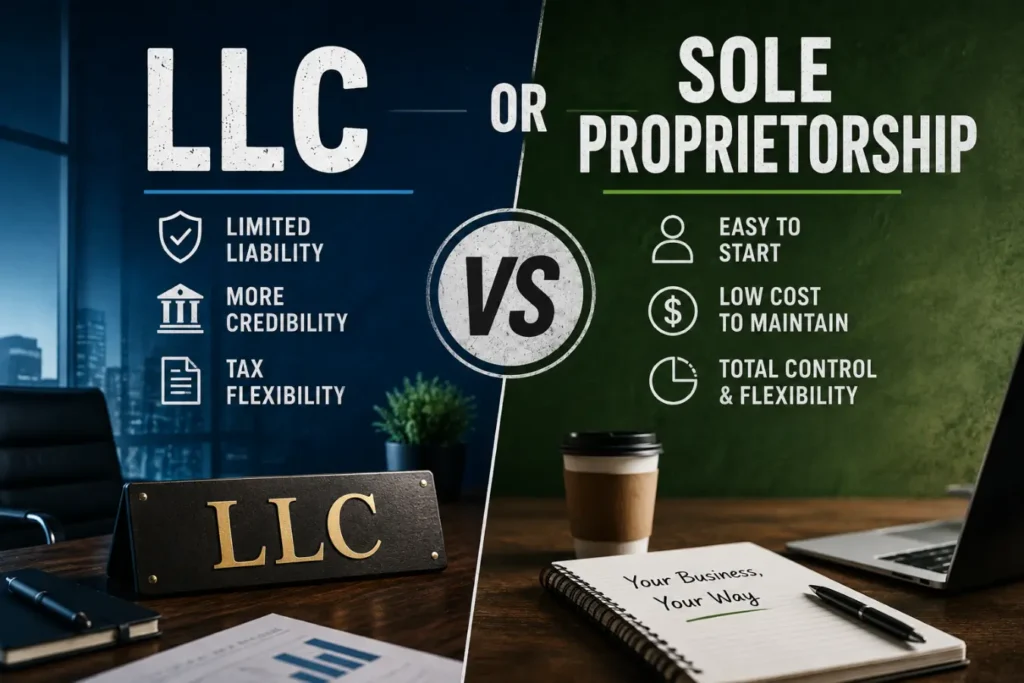
LLC or sole proprietorship is one of the most important decisions new business owners face. The business structure you choose affects taxes, legal protection, paperwork, and future growth.
Many people start a business without understanding the differences. As a result, they may face legal or financial problems later. That is why choosing the right structure matters from the beginning.
A sole proprietorship is simple and easy to start. An LLC offers legal protection and added credibility. However, each option has advantages and drawbacks.
In this guide, you will learn how both structures work. You will also discover key differences, real-life examples, expert tips, and common mistakes to avoid. By the end, you will know which option fits your business goals best.
Quick Summary Box
- A sole proprietorship is the simplest business structure.
- An LLC stands for Limited Liability Company.
- Sole proprietors and businesses are legally the same entity.
- LLC owners receive personal liability protection.
- Sole proprietorships require less paperwork.
- LLCs often appear more professional.
- Both structures offer pass-through taxation.
- Business goals help determine the best choice.
- LLCs usually cost more to maintain.
- Sole proprietorships work well for low-risk businesses.
What Does LLC or Sole Proprietorship Mean?
When comparing LLC or sole proprietorship, you are choosing how to legally organize your business.
A sole proprietorship is owned and operated by one person.
An LLC, or Limited Liability Company, is a separate legal entity that protects the owner’s personal assets.
Both structures allow people to run businesses. However, they differ in liability protection, setup costs, taxes, and management requirements.
Understanding these differences helps you make a smart business decision.
LLC vs Sole Proprietorship: Quick Comparison Table
| Feature | Sole Proprietorship | LLC |
| Legal Separation | No | Yes |
| Personal Liability Protection | No | Yes |
| Startup Cost | Low | Moderate |
| Paperwork | Minimal | More Required |
| Taxation | Pass-Through | Pass-Through |
| Credibility | Basic | Higher |
| Business Continuity | Ends with Owner | More Flexible |
| Asset Protection | Limited | Strong |
This table highlights the major differences between the two business structures.
What Is a Sole Proprietorship?
A sole proprietorship is the easiest business structure to create.
One person owns and manages the business.
The owner receives all profits. Likewise, the owner takes all losses.
Examples include:
- Freelance writers
- Graphic designers
- Tutors
- Pet sitters
- Local consultants
Most people automatically become sole proprietors when they start earning business income.
No separate legal entity exists between the owner and the business.
What Is an LLC?
A Limited Liability Company, or LLC, creates a legal separation between the owner and the business.
This structure protects personal assets.
If the business faces debt or lawsuits, personal savings and property usually remain protected.
Many business owners choose LLCs because they provide:
- Liability protection
- Greater credibility
- Flexible management
- Tax advantages in some situations
An LLC can have one owner or multiple owners.
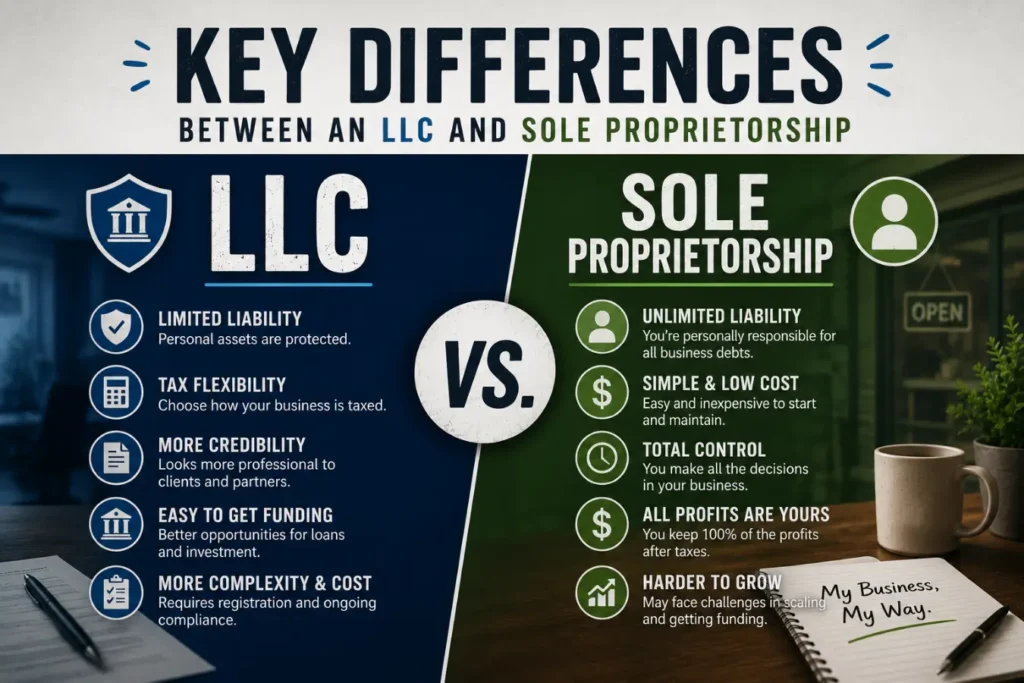
Key Differences Between an LLC and Sole Proprietorship
Several important differences separate these business structures.
Liability Protection
An LLC protects personal assets.
A sole proprietorship does not.
Business Credibility
Many customers trust LLCs more.
The formal structure often appears more professional.
Formation Requirements
Sole proprietorships require little paperwork.
LLCs require state registration.
Ongoing Compliance
LLCs may require annual reports and fees.
Sole proprietorships generally have fewer requirements.
These differences often influence business owners’ decisions.
LLC or Sole Proprietorship for Taxes
Taxes often play a major role when choosing a business structure.
The good news is that both structures generally use pass-through taxation.
This means:
- Business profits pass directly to the owner.
- The owner reports income on a personal tax return.
- The business itself usually does not pay federal income tax.
However, LLC owners may later elect different tax treatments.
For example, some choose S Corporation taxation to reduce self-employment taxes.
This flexibility attracts many growing businesses.
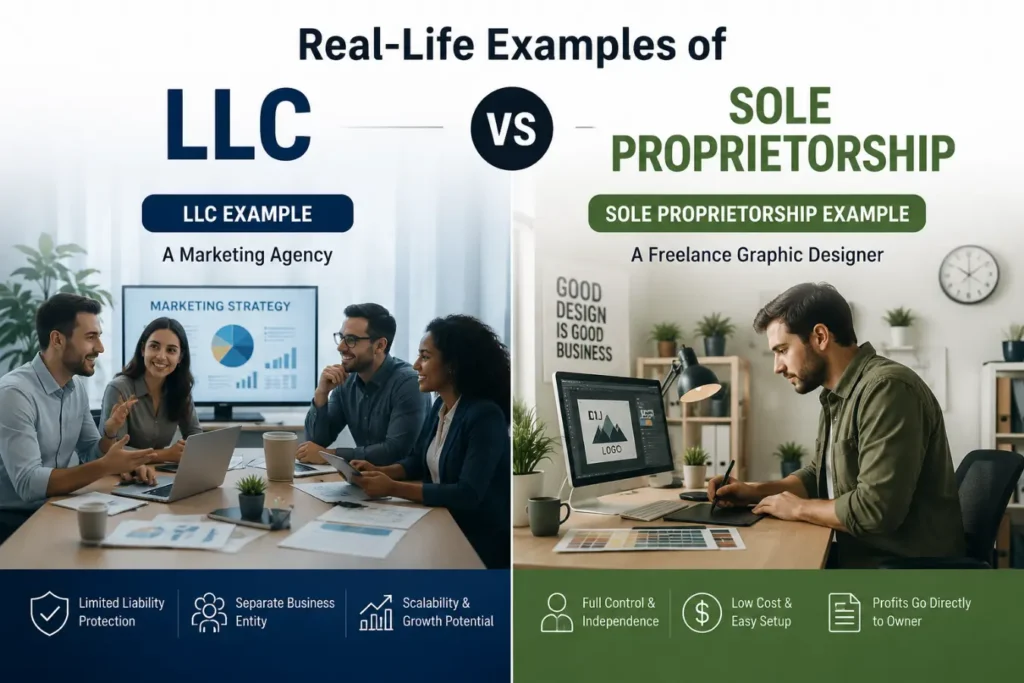
Real-Life Examples of LLC vs Sole Proprietorship
Example 1: Freelance Writer
Sarah works from home and serves a few clients.
She has minimal legal risk.
A sole proprietorship may work well initially.
Example 2: Landscaping Business
David owns expensive equipment and hires employees.
He faces potential liability risks.
An LLC provides stronger protection.
Example 3: Online Store Owner
Emma sells products nationwide.
Customer disputes and product claims could arise.
An LLC helps protect personal assets.
These examples show how business activities affect the best choice.
Advantages of a Sole Proprietorship
Many entrepreneurs start with a sole proprietorship because of its simplicity.
Easy Setup
Little paperwork is required.
Low Cost
Startup expenses remain minimal.
Full Control
The owner makes all decisions.
Simple Taxes
Income reporting remains straightforward.
For small side businesses, these benefits can be attractive.
Benefits of Forming an LLC
An LLC offers several advantages beyond liability protection.
Personal Asset Protection
Personal property generally remains separate from business liabilities.
Professional Image
Many customers prefer working with registered businesses.
Flexible Tax Options
Owners may choose alternative tax treatments later.
Easier Business Growth
Investors and lenders often favor formal business entities.
As businesses expand, these benefits become more valuable.
Common Mistakes When Choosing a Business Structure
Many new business owners make avoidable mistakes.
Choosing Based Only on Cost
Low startup costs should not be the only factor.
Ignoring Liability Risks
Lawsuits can happen unexpectedly.
Forgetting Future Growth Plans
Your business may expand faster than expected.
Mixing Personal and Business Finances
Separate accounts improve financial management.
Skipping Professional Advice
Accountants and attorneys provide valuable guidance.
Avoiding these mistakes can save time and money.
Tips for Deciding Between LLC and Sole Proprietorship
Choosing the right structure becomes easier when you ask the right questions.
Consider Your Risk Level
Higher-risk businesses often benefit from LLC protection.
Think About Growth
Future expansion may favor an LLC.
Evaluate Costs
Compare formation and maintenance expenses.
Consider Customer Perception
A formal business structure can build trust.
Review Tax Goals
Different tax options may create long-term savings.
Careful planning helps you make a better decision.
How Business Owners Use These Structures in Daily Life
Business structures affect everyday operations.
A sole proprietor may:
- Use a simple bookkeeping system
- File taxes directly on a personal return
- Operate with minimal paperwork
An LLC owner may:
- Maintain separate business accounts
- File annual state reports
- Use business contracts more often
These daily differences influence overall business management.
Synonyms and Related Terms
Search engines associate many related phrases with this topic.
Common synonyms and related keywords include:
- LLC vs sole proprietorship
- Business entity comparison
- Limited liability company
- Small business structure
- Business formation options
- Self-employed business owner
- Single-member LLC
- Business registration
- Legal business structure
- Entrepreneur business setup
Including these concepts improves topical relevance.
Expert Insights: Which Structure Is Better?
Business experts often recommend choosing based on risk and long-term goals.
A sole proprietorship works well when:
- Risk is low
- Income is modest
- Simplicity matters most
An LLC often works better when:
- Liability concerns exist
- Growth is expected
- Professional credibility matters
The best structure depends on your specific situation.
Many successful businesses start as sole proprietorships and later become LLCs.
Frequently Asked Questions (FAQs)
Is an LLC better than a sole proprietorship?
An LLC offers liability protection, while a sole proprietorship does not.
Does an LLC pay more taxes?
Not necessarily. Both often use pass-through taxation.
Can I change from a sole proprietorship to an LLC?
Yes. Many business owners make this transition as they grow.
Which is cheaper to start?
A sole proprietorship usually costs less to establish.
Do LLCs protect personal assets?
Yes. LLCs generally separate personal and business liabilities.
Is an LLC required for a small business?
No. Many small businesses operate as sole proprietorships.
Can one person own an LLC?
Yes. A single-member LLC can have one owner.
Which structure looks more professional?
An LLC often appears more credible to customers and partners.
Featured Snippet: LLC or Sole Proprietorship
LLC or sole proprietorship? A sole proprietorship is easier and cheaper to start. An LLC provides personal liability protection and greater credibility. Sole proprietorships work well for low-risk businesses. LLCs often suit businesses with growth plans, employees, or higher legal risks.
Conclusion
Choosing between LLC or sole proprietorship depends on your business goals, risk level, and future plans. A sole proprietorship offers simplicity, low costs, and easy management. An LLC provides stronger legal protection, greater flexibility, and a more professional image.
Both structures have advantages. Therefore, there is no one-size-fits-all answer. New entrepreneurs often begin as sole proprietors and later form LLCs as their businesses grow.
Before making a decision, evaluate your risks, budget, and long-term objectives. When in doubt, speak with a qualified business attorney or accountant. The right structure today can support your success for years to come.