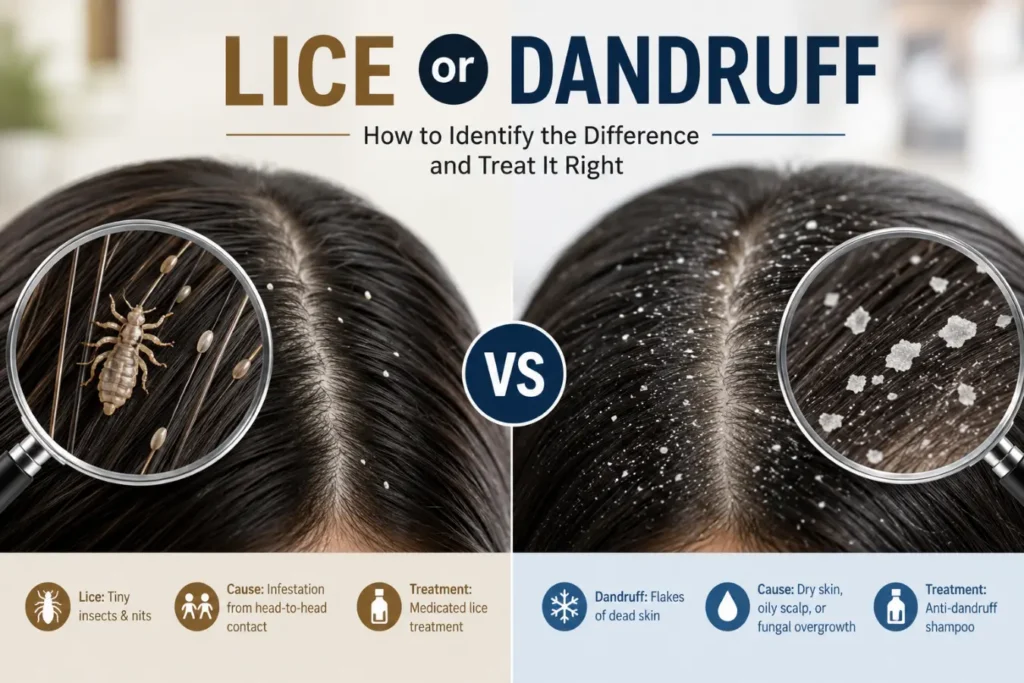
Lice or dandruff can look surprisingly similar at first glance. Both conditions often cause white flakes in the hair and an itchy scalp. Because of this, many parents and adults mistake one for the other.
However, lice and dandruff are very different problems. One comes from tiny insects that live in the hair. The other usually results from dry skin, excess oil, or scalp conditions.
Knowing the difference matters. If you treat dandruff as lice, you may waste time and money. Likewise, treating lice as dandruff can allow the infestation to spread.
This guide explains the key signs, causes, treatment options, and prevention tips. By the end, you will know exactly how to identify the problem and choose the correct solution.
Quick Answer Box
- Lice are tiny insects that live on the scalp.
- Dandruff consists of dead skin flakes.
- Lice attach eggs firmly to hair strands.
- Dandruff flakes fall off easily.
- Lice spread through head-to-head contact.
- Dandruff is not contagious.
- Both may cause itching.
- Proper diagnosis helps choose the right treatment.
Featured Snippet: Lice or Dandruff?
Lice and dandruff can both cause an itchy scalp, but they have different causes. Lice are small insects that live in the hair and lay eggs called nits. Dandruff consists of loose skin flakes that shed from the scalp. Nits stick firmly to hair strands, while dandruff flakes brush away easily.
Why People Confuse Lice and Dandruff
The confusion happens because both conditions create visible particles in the hair.
At a quick glance, they may appear identical.
However, closer inspection usually reveals clear differences.
Many parents first notice:
- White specks
- Frequent scratching
- Scalp irritation
These symptoms can point to either condition.
Therefore, careful observation becomes important.
What Are Head Lice?
Head lice are tiny parasitic insects.
They survive by feeding on small amounts of blood from the scalp.
Lice do not jump or fly.
Instead, they crawl from one person to another through direct contact.
Common signs include:
- Persistent itching
- Moving insects in the hair
- Nits attached to hair shafts
- Irritated scalp
School-age children experience lice more often than adults.
What Is Dandruff?
Dandruff is a scalp condition.
It causes skin cells to shed faster than normal.
The result is visible white or yellow flakes.
Contributing factors may include:
- Dry skin
- Oily scalp
- Sensitivity to hair products
- Yeast overgrowth on the scalp
Unlike lice, dandruff is not caused by insects.
Lice vs Dandruff Comparison Table
| Feature | Lice | Dandruff |
| Cause | Parasitic insects | Scalp condition |
| Contagious | Yes | No |
| White Particles | Nits | Skin flakes |
| Movement | Live lice move | Flakes do not move |
| Location | Hair shafts | Scalp surface |
| Removal | Difficult | Easy |
| Itching | Common | Common |
| Treatment | Lice products | Anti-dandruff products |
How to Identify Nits in Hair
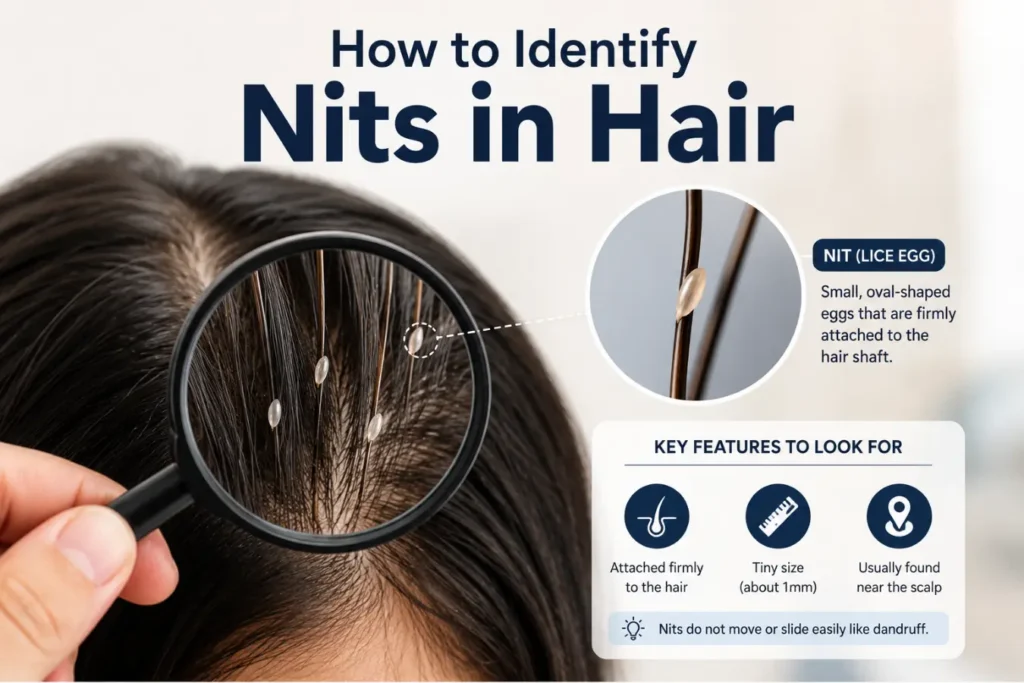
Nits are lice eggs.
They often appear:
- White
- Tan
- Yellowish
Unlike dandruff, they stick tightly to hair strands.
Try this simple test:
If the particle slides off easily, it is likely dandruff.
If it stays attached, it may be a nit.
This is one of the easiest ways to tell the difference.
Signs Your Child May Have Lice
Parents often notice symptoms before seeing actual lice.
Watch for:
Frequent Head Scratching
Children may scratch behind the ears and near the neck.
Sleep Problems
Lice can become more active at night.
Visible Nits
Eggs often appear close to the scalp.
Irritated Skin
Repeated scratching may cause redness.
Early detection helps prevent spreading.
Symptoms Commonly Seen With Dandruff
Dandruff often produces different patterns.
Typical signs include:
- Dry scalp
- White flakes on clothing
- Mild itching
- Scalp irritation
- Oily patches
Unlike lice, dandruff does not involve insects or eggs.
Real-Life Scenario: Lice or Dandruff?
Imagine a parent notices white particles in a child’s hair.
At first, dandruff seems likely.
However, the particles remain attached after brushing.
Further inspection reveals small oval-shaped eggs.
The issue turns out to be lice.
In another case, flakes fall away immediately and appear on the shoulders.
That situation usually points to dandruff.
These simple observations can make diagnosis easier.
Treatment Options for Head Lice
Successful lice treatment often requires multiple steps.
Medicated Shampoos
Special lice shampoos help kill insects.
Nit Removal
A fine-tooth lice comb removes eggs.
Cleaning Personal Items
Wash:
- Bedding
- Hats
- Hair accessories
- Pillowcases
Family Screening
Check household members for signs of infestation.
How to Treat Dandruff Effectively
Dandruff usually responds well to scalp care.
Helpful options include:
Anti-Dandruff Shampoo
Products containing active ingredients may reduce flakes.
Regular Hair Washing
Consistent cleansing removes excess oil.
Gentle Hair Products
Avoid products that irritate the scalp.
Scalp Hydration
Managing dryness can reduce symptoms.
Persistent cases may require professional advice.
Common Mistakes People Make
Many individuals delay treatment because of incorrect assumptions.
Assuming Every White Flake Is Dandruff
Not all flakes come from dry skin.
Ignoring Persistent Itching
Severe itching deserves closer examination.
Using the Wrong Shampoo
Lice shampoos do not treat dandruff effectively.
Skipping Follow-Up Checks
Lice eggs can survive if not removed properly.
Correct identification remains essential.
Prevention Tips for Healthy Hair and Scalp
Simple habits can reduce risks.
To Help Prevent Lice
- Avoid sharing combs
- Avoid sharing hats
- Limit head-to-head contact
To Help Reduce Dandruff
- Wash hair regularly
- Manage scalp oil buildup
- Use suitable hair products
Prevention often saves time and discomfort later.
Related Terms and Search Variations
Readers often search for related topics such as:
- lice eggs vs dandruff
- itchy scalp causes
- white flakes in hair
- nits in hair
- scalp conditions
- dandruff treatment
- head lice symptoms
- dry scalp vs dandruff
- lice identification
- flaky scalp solutions
These terms help answer related questions users commonly have.
Expert Insight
Healthcare professionals recommend confirming the cause before beginning treatment.
Many people self-diagnose incorrectly.
A simple visual examination often provides the answer.
Look closely at:
- Hair shafts
- Scalp condition
- Flake movement
- Egg attachment
When uncertainty remains, consult a healthcare provider or school nurse.
Accurate identification leads to faster results.
Frequently Asked Questions
Can dandruff turn into lice?
No. Dandruff and lice are completely different conditions.
Do lice cause white flakes?
Lice themselves do not create flakes, but nits may resemble them.
Are lice contagious?
Yes. They spread through direct contact.
Is dandruff contagious?
No. It cannot spread from person to person.
How do I know if I have nits?
Nits stay attached firmly to hair strands.
Can adults get head lice?
Yes. Anyone can get lice.
Will regular shampoo remove lice?
Regular shampoo usually does not eliminate lice completely.
Can dandruff cause itching?
Yes. Itching is a common symptom of dandruff.
Conclusion
When comparing lice or dandruff, the key difference lies in the cause. Lice are living insects that attach eggs to hair strands. Dandruff is a scalp condition that creates loose skin flakes. Although both may cause itching and visible particles, their treatment methods differ significantly.
Checking whether the particles move easily or remain attached can provide an important clue. Early identification helps prevent unnecessary treatments and reduces discomfort. If symptoms continue or the diagnosis remains unclear, seek professional guidance. The sooner you identify the problem, the faster you can restore a healthy, comfortable scalp.