Cell wall prokaryotic or eukaryotic is a common biology question that many students ask. The answer depends on the type of cell. Some prokaryotic cells have a cell wall. Likewise, some eukaryotic cells also have one. However, not every eukaryotic cell includes a cell wall. This difference often causes confusion. Fortunately, the concept is simple once you understand the basics.
In this guide, you will learn what a cell wall is, which cells have it, and why it matters. You will also see simple examples, an easy comparison table, common mistakes, and expert tips. By the end, you will clearly understand cell wall prokaryotic or eukaryotic without memorizing difficult biology terms.
Quick Summary
- A cell wall gives shape, strength, and protection.
- Most prokaryotic cells have a cell wall.
- Some eukaryotic cells have a cell wall.
- Plant, fungal, and algal cells contain a cell wall.
- Animal cells do not have a cell wall.
- Bacterial cell walls contain peptidoglycan.
- Plant cell walls mainly contain cellulose.
- Cell walls differ in structure and function.
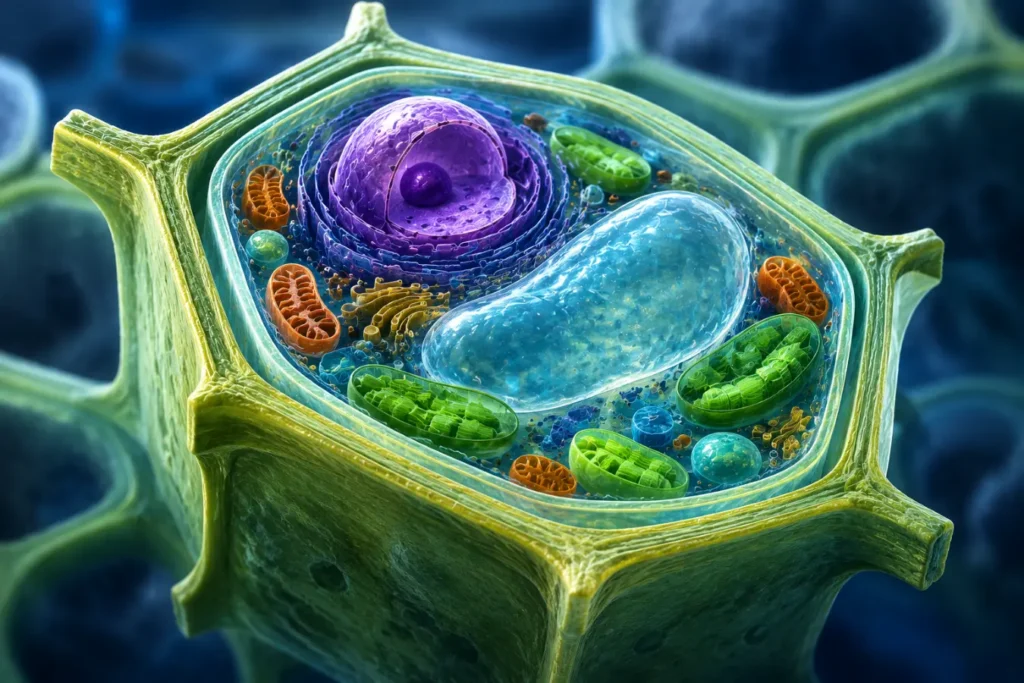
What Is a Cell Wall?
A cell wall is a strong outer layer around the cell membrane.
It helps the cell:
- Keep its shape
- Stay strong
- Protect against damage
- Prevent bursting from water pressure
- Support growth
The cell wall sits outside the cell membrane. However, not every living cell has one.
Is the Cell Wall Prokaryotic or Eukaryotic?
The short answer is both.
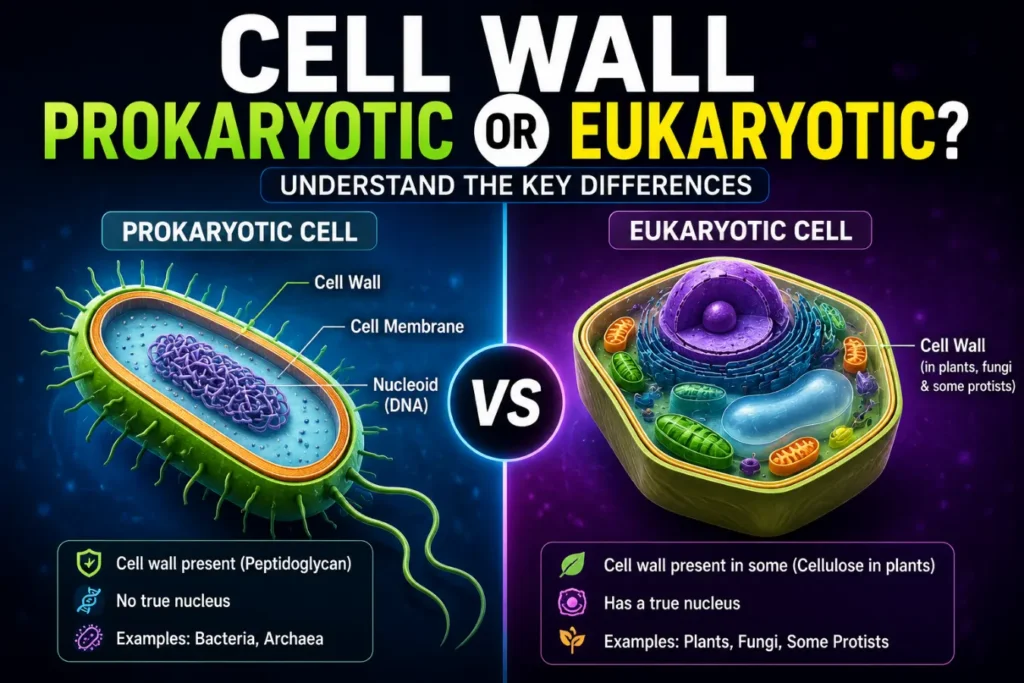
Many prokaryotic cells have a cell wall. Likewise, several eukaryotic cells also have one. However, their cell walls contain different materials.
Prokaryotic cells with a cell wall
- Bacteria
- Most Archaea
Eukaryotic cells with a cell wall
- Plants
- Fungi
- Most algae
Eukaryotic cells without a cell wall
- Animals
- Humans
Therefore, the correct answer to cell wall prokaryotic or eukaryotic is both, but the composition differs.
What Are Prokaryotic Cells?
Prokaryotic cells are simple cells without a nucleus.
They also lack membrane-bound organelles.
Examples include:
- Bacteria
- Archaea
Key features
- Small size
- Simple structure
- Usually one cell
- Cell wall in most species
- Circular DNA
The cell wall helps these tiny organisms survive in different environments.
What Are Eukaryotic Cells?
Eukaryotic cells have a true nucleus.
They also contain membrane-bound organelles.
Examples include:
- Plants
- Animals
- Fungi
- Algae
- Protists
Unlike prokaryotes, some eukaryotic cells have a cell wall, while others do not.
Cell Wall in Prokaryotic vs Eukaryotic Cells
| Feature | Prokaryotic Cell Wall | Eukaryotic Cell Wall |
| Found in | Bacteria and most Archaea | Plants, fungi, algae |
| Main material | Peptidoglycan (bacteria) | Cellulose, chitin, or other polysaccharides |
| Purpose | Protection and shape | Support, protection, and structure |
| Animal cells | Not applicable | No cell wall |
| Flexibility | Less flexible | Depends on the organism |
This table makes the difference easier to remember.
What Is the Cell Wall Made Of?
Different organisms build their cell walls from different materials.
Bacteria
- Peptidoglycan
Plants
- Cellulose
- Hemicellulose
- Pectin
Fungi
- Chitin
Algae
- Cellulose or other complex carbohydrates
Each material supports the needs of that organism.
Why Is the Cell Wall Important?
The cell wall performs several important jobs.
It helps the cell:
- Maintain its shape
- Protect against injury
- Resist water pressure
- Support healthy growth
- Prevent bursting
- Survive harsh environments
Without a cell wall, many organisms could not survive.
Real-Life Examples of Cells with and Without Cell Walls
These examples make the concept easier.
Example 1: Plant Cell
A tree stands upright because plant cells have strong cellulose cell walls.
Example 2: Bacterial Cell
Bacteria survive in soil because their cell walls protect them from damage.
Example 3: Animal Cell
Human skin cells stay flexible because they lack a rigid cell wall.
Example 4: Mushroom Cell
Fungi use chitin cell walls for strength and protection.
Common Mistakes Students Make
Students often confuse these biology concepts.
Incorrect
- All eukaryotic cells have a cell wall.
- Animal cells contain cellulose.
- Every prokaryote has the same cell wall.
Correct
- Some eukaryotic cells have a cell wall.
- Animal cells do not have a cell wall.
- Different organisms have different cell wall materials.
Avoid these mistakes during exams.
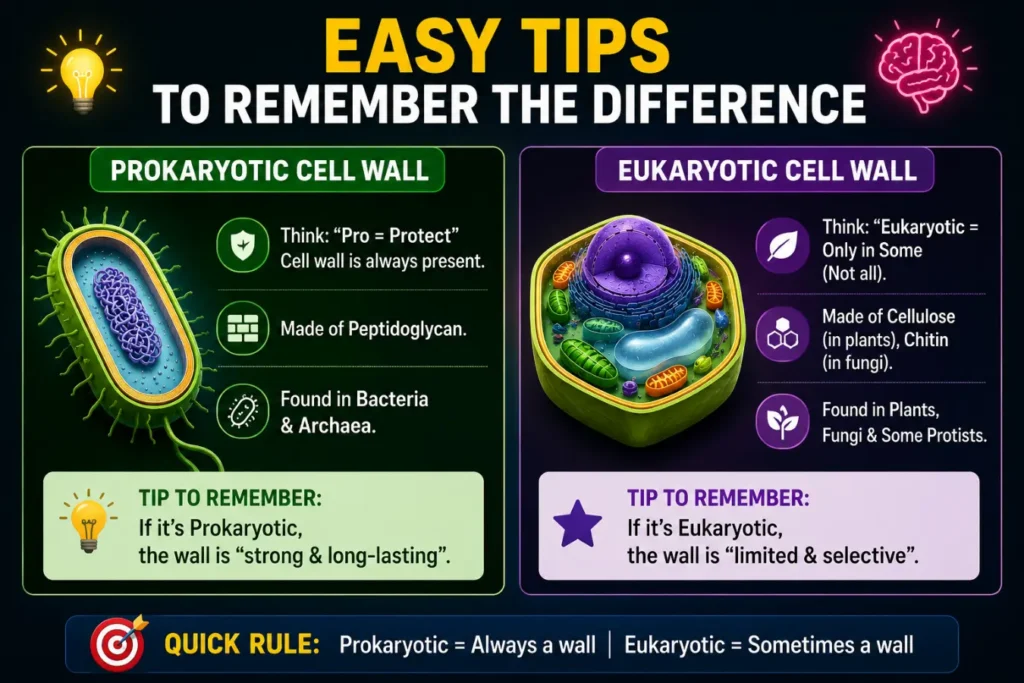
Easy Tips to Remember the Difference
These memory tricks help many students.
- Plants = Cellulose
- Fungi = Chitin
- Bacteria = Peptidoglycan
- Animals = No cell wall
Another simple trick:
Plants stand tall because they have walls. Animals move freely because they do not.
How This Topic Helps in Daily Life
Understanding cell walls helps you learn many science topics.
You will understand:
- Biology exams
- Microbiology
- Medicine
- Agriculture
- Biotechnology
- Food science
It also helps you understand how antibiotics work against bacteria.
Related Biology Terms and Synonyms
Although these are not exact synonyms, they are closely related.
- Cell membrane
- Plasma membrane
- Cell structure
- Prokaryotic cell
- Eukaryotic cell
- Bacterial cell wall
- Plant cell wall
- Cellulose
- Chitin
- Peptidoglycan
- Cell support
- Cell protection
These related terms improve your understanding of the topic.
Expert Insight
Students often memorize biology facts without understanding them. Instead, focus on why each organism needs a cell wall. Plants need support. Bacteria need protection. Animals rely on flexible tissues instead of rigid walls. This simple approach improves learning and helps you remember the topic for longer. Understanding these differences also builds a strong foundation for advanced biology.
Frequently Asked Questions
Is a cell wall found in prokaryotic or eukaryotic cells?
Both. Most prokaryotic cells have one, and some eukaryotic cells also have one.
Do all eukaryotic cells have a cell wall?
No. Plant, fungal, and algal cells have one. Animal cells do not.
Why do bacteria have a cell wall?
The cell wall protects bacteria and helps them keep their shape.
What is the main material in a plant cell wall?
Plant cell walls mainly contain cellulose.
Do animal cells have a cell wall?
No. Animal cells only have a cell membrane.
What is the main material in bacterial cell walls?
Most bacterial cell walls contain peptidoglycan.
Why is the cell wall important?
It provides support, protection, and structural strength.
Conclusion
The question cell wall prokaryotic or eukaryotic has a simple answer. Both groups can have a cell wall, but they differ in composition and function. Most prokaryotic cells use peptidoglycan to build their walls. Plant cells use cellulose, while fungi use chitin. Animal cells do not have a cell wall because they need greater flexibility. Remember these key differences instead of memorizing long definitions. Once you know which organisms have a cell wall and what it contains, this biology topic becomes much easier. Keep practicing with real-life examples, and you will answer exam questions with confidence.