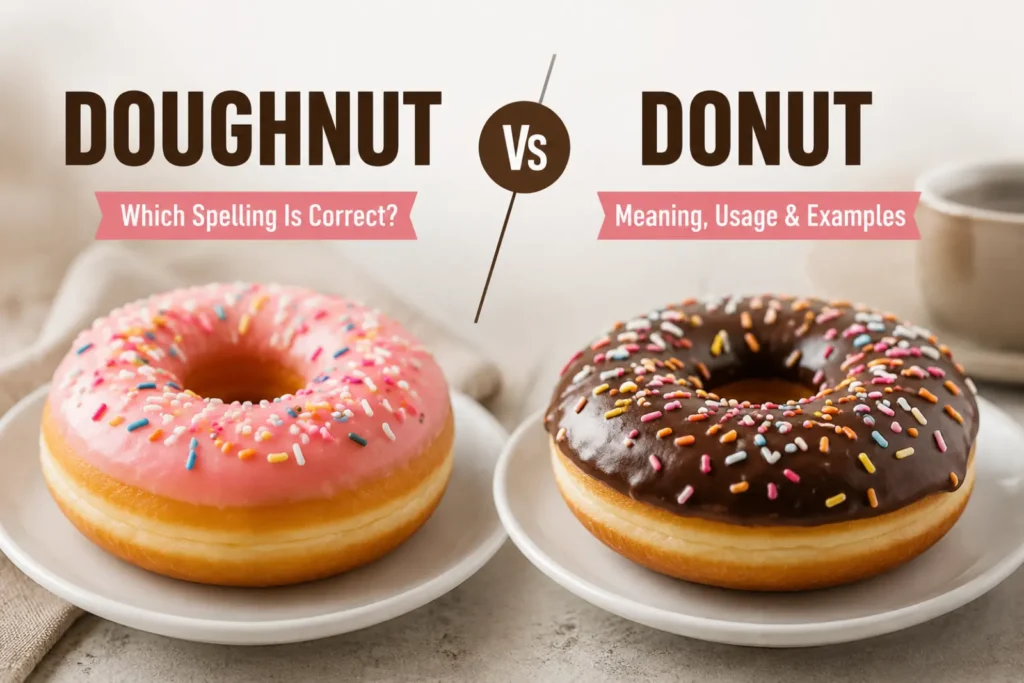
Doughnut or donut is a question many English learners and writers ask. Both words describe the same sweet, fried pastry. However, their spelling often creates confusion. You may see doughnut in dictionaries, while many restaurants and brands prefer donut. So, which one should you use? The good news is that both spellings are correct. The best choice depends on your audience, writing style, and location.
In this guide, you will learn the difference between the two spellings, where each one is common, and how to use them correctly. You will also find simple examples, a comparison table, useful tips, and answers to common questions. By the end, choosing between doughnut or donut will feel easy.
Quick Summary
- Doughnut and donut have the same meaning.
- Both spellings are correct.
- Doughnut is the traditional spelling.
- Donut is the simplified American spelling.
- Many brands use donut in marketing.
- Formal writing often prefers doughnut.
- Choose one spelling and stay consistent.
What Does Doughnut Mean?
A doughnut is a sweet pastry made from dough.
People usually fry it in oil and add toppings such as:
- Sugar
- Chocolate
- Glaze
- Cinnamon
- Sprinkles
Some doughnuts have a hole in the middle. Others contain fillings like cream or jam.
What Does Donut Mean?
Donut means exactly the same thing as doughnut.
The only difference is the spelling.
Many American businesses use donut because it looks shorter and feels easier to read.
The pronunciation remains the same.
Doughnut or Donut: What’s the Difference?
There is no difference in meaning.
The distinction comes from spelling and usage.
| Feature | Doughnut | Donut |
| Meaning | Sweet fried pastry | Sweet fried pastry |
| Spelling style | Traditional | Simplified |
| Common in dictionaries | Yes | Yes |
| Common in formal writing | More common | Less common |
| Popular in advertising | Sometimes | Very common |
| Pronunciation | Same | Same |
The table shows that both words describe the same food.
Which Spelling Is Correct?
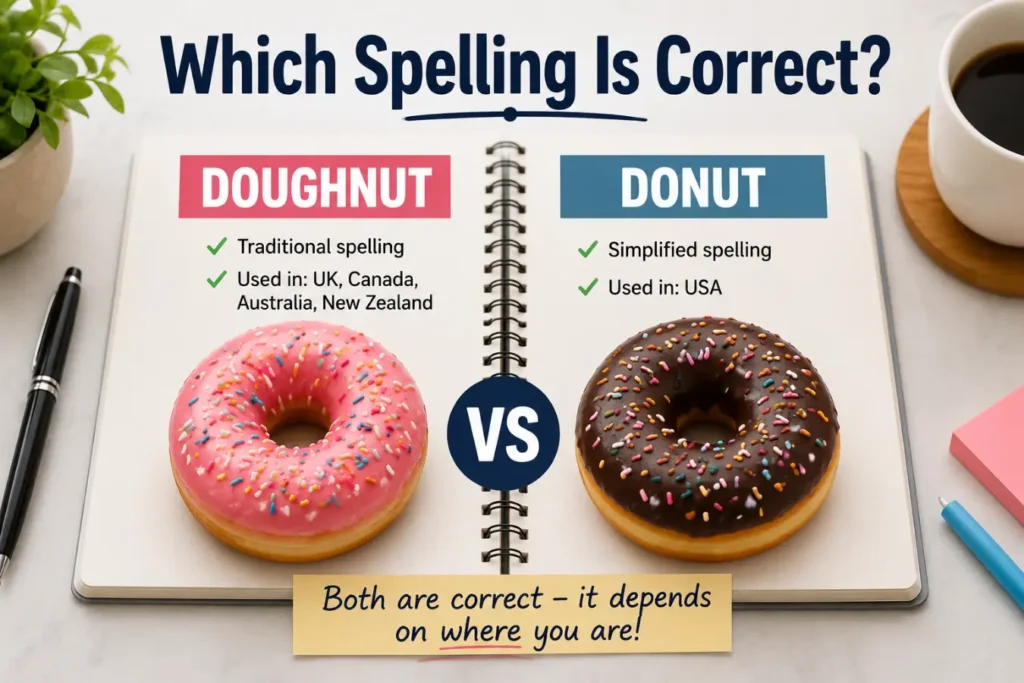
Both spellings are correct.
However, the best choice depends on the situation.
Use doughnut when:
- Writing school assignments
- Creating formal documents
- Following traditional English
- Using many dictionaries as a guide
Use donut when:
- Writing casual content
- Creating advertisements
- Following modern American usage
- Referring to well-known food brands
Choose one spelling and use it throughout your writing.
Why Do Two Spellings Exist?
English changes over time.
Originally, people used doughnut because the pastry came from sweet dough shaped like a small nut.
Later, businesses shortened the spelling to donut.
The shorter version became popular in advertising and everyday American English.
Today, both forms appear in books, websites, menus, and recipes.
Real-Life Examples
These examples show how each spelling appears in daily life.
At a Bakery
“I bought two chocolate doughnuts this morning.”
In an Advertisement
“Fresh donuts available every day.”
In a Recipe
“This recipe makes twelve homemade doughnuts.”
On Social Media
“I can’t resist warm glazed donuts.”
Each sentence sounds natural because both spellings are accepted.
Common Mistakes to Avoid
Many people make small spelling mistakes.
Incorrect
- Dough nut
- Dough-nut
- Donought
- Donat
Correct
- Doughnut
- Donut
Another mistake is switching between both spellings in the same article.
Stay consistent from beginning to end.
Easy Tips to Remember the Difference
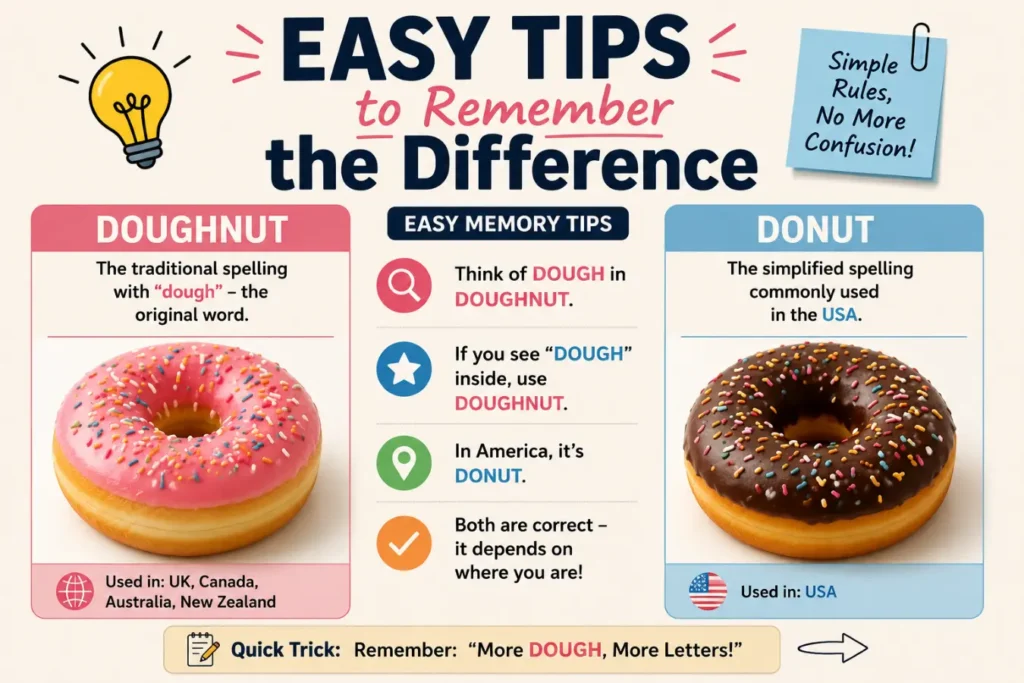
These simple tricks help you choose the right spelling.
- Doughnut is the older spelling.
- Donut is the shorter spelling.
- Formal writing usually prefers doughnut.
- Casual writing often uses donut.
- Neither spelling changes the meaning.
A simple memory tip:
Long word for traditional writing. Short word for modern branding.
How People Use These Words Every Day
You will see both spellings in many places.
Examples include:
- Bakery menus
- Coffee shops
- Food blogs
- Recipe websites
- Grocery stores
- Social media posts
- Restaurant signs
Most readers understand both spellings immediately.
Synonyms
Although these are not exact synonyms, they relate closely to the topic.
- Fried pastry
- Sweet pastry
- Glazed doughnut
- Jelly doughnut
- Ring doughnut
- Filled donut
- Bakery treat
- Breakfast pastry
- Dessert
- Baked goods
Expert Insight
From a language perspective, both spellings are correct. However, consistency matters more than the spelling itself. If you choose doughnut, use it throughout your article. If you prefer donut, keep that spelling from start to finish. This approach improves readability, creates a professional appearance, and avoids confusing readers. For SEO, either spelling can perform well when it matches the user’s search intent.
Frequently Asked Questions
Is doughnut or donut correct?
Both spellings are correct. They refer to the same sweet pastry.
Which spelling is more common?
Donut appears more often in modern American advertising, while doughnut remains common in dictionaries and formal writing.
Is donut an American spelling?
Yes. Donut is the simplified spelling widely used in American English.
Do doughnut and donut mean different foods?
No. Both words describe the same food.
Which spelling should I use in formal writing?
Many style guides and dictionaries prefer doughnut for formal writing.
Why do restaurants often use donut?
Many businesses choose donut because it looks shorter, simpler, and more memorable.
Can I use both spellings in one article?
It is better to choose one spelling and use it consistently.
Conclusion
Choosing between doughnut or donut is easier than many people think. Both spellings are correct, and both describe the same delicious pastry. The main difference lies in writing style rather than meaning. Doughnut follows the traditional spelling and often appears in formal writing. Donut offers a shorter, modern version that many American brands and businesses prefer. Before you write, think about your audience and purpose. Then stick with one spelling throughout your content. Consistent writing improves clarity and creates a better reading experience. Once you understand this simple distinction, you can confidently use either spelling whenever the situation calls for it.