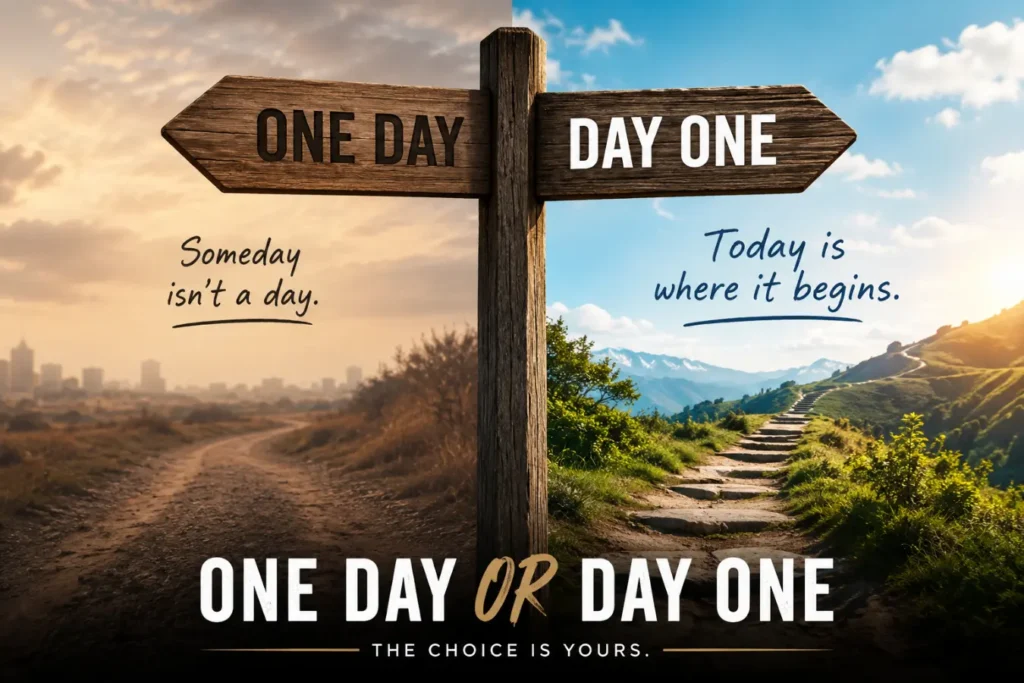
One day or day one is a popular phrase used in motivation and writing. Many people search one day or day one when learning English or self-growth ideas. The phrase one day or day one often confuses learners because both sound powerful but mean different things.
In simple words, this topic is about choice and action. One phrase talks about the future. The other talks about the start of action. Many students, writers, and speakers mix them up.
In this guide, you will learn the correct meaning in very simple English. You will see real examples, mistakes, and daily usage. You will also learn how to use both phrases in life, study, and motivation. By the end, you will clearly understand when to say “one day” and when to say “day one.”
Quick Summary Box
- One day means a future time or dream
- Day one means the first step or start
- One day = hope, future plan
- Day one = action, beginning
- “One day” is passive thinking
- “Day one” is active mindset
- Both are used in motivation and self-growth
- Choice depends on mindset: dreaming vs doing
What Does “One Day” Mean?
“One day” means some time in the future. It is not fixed. It shows hope or imagination.
Simple meaning:
👉 A future time that is not decided
Examples:
- One day, I will travel the world.
- One day, she will become a doctor.
- One day, we will live in a big house.
It shows dreams and wishes.
What Does “Day One” Mean?
“Day one” means the first day of starting something. It shows action and beginning.
Simple meaning:
👉 The first step of a journey
Examples:
- Day one of my fitness journey starts today.
- We learn English from day one.
- Day one of the project was exciting.
It shows action and commitment.
One Day or Day One: Key Difference Explained
This is the most important part.
| Feature | One Day | Day One |
| Meaning | Future dream | Start of action |
| Focus | Hope | Action |
| Time | Unclear future | First step |
| Mindset | Passive | Active |
| Example | One day I will write a book | Day one I started writing |
Simple trick:
- “One day” = later
- “Day one” = now
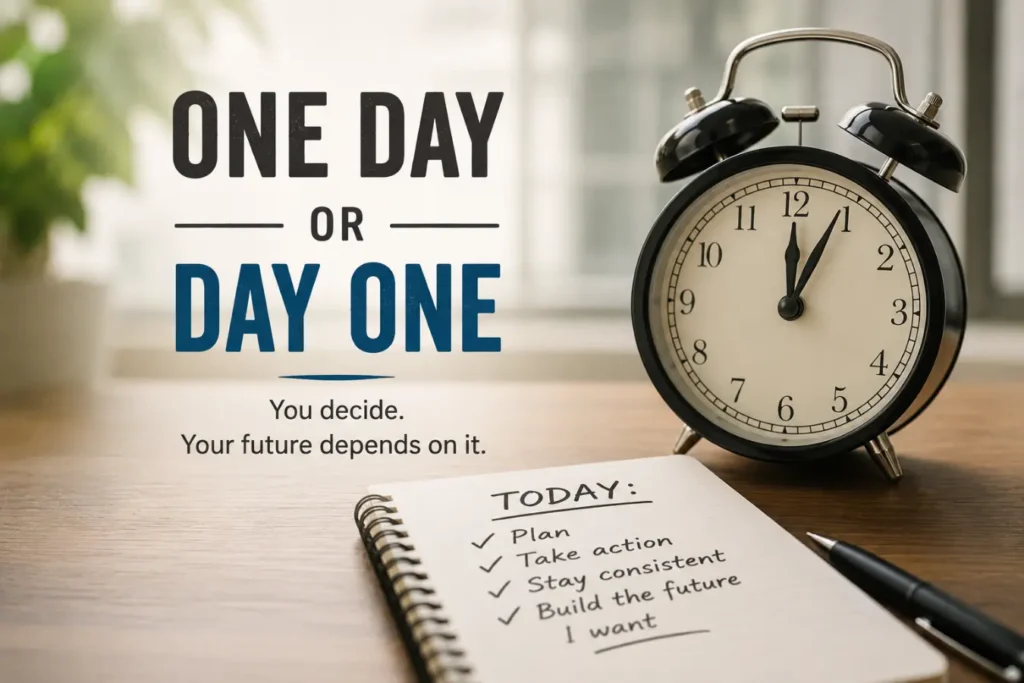
Real-Life Examples of One Day
“One day” is used when people talk about dreams.
Examples:
- One day I will visit Paris.
- One day I will start my own business.
- One day I will learn coding.
It shows motivation but no action yet.
Real-Life Examples of Day One
“Day one” is used when action starts.
Examples:
- Day one of gym training was hard.
- Day one of school was exciting.
- Day one of my diet plan began today.
It shows real progress.
Common Mistakes People Make
Mixing both phrases
- ❌ One day I started my gym
- ✅ Day one I started my gym
Using “day one” for dreams
- ❌ Day one I will become rich
- ✅ One day I will become rich
Confusing mindset meaning
Many learners think both are same. They are not.
Tips to Remember Easily
Time Rule
- Future = One day
- Start = Day one
Action Rule
- If action is happening → Day one
- If wish is spoken → One day
Motivation Rule
- Dream it → One day
- Do it → Day one
Usage in Daily Life
These phrases are used in many situations.
1. Education
- One day I will pass with top marks.
- Day one of study plan starts now.
2. Fitness
- One day I will be fit.
- Day one of workout begins today.
3. Career
- One day I will get a good job.
- Day one of my career starts now.
4. Business
- One day I will start a company.
- Day one of startup journey begins.
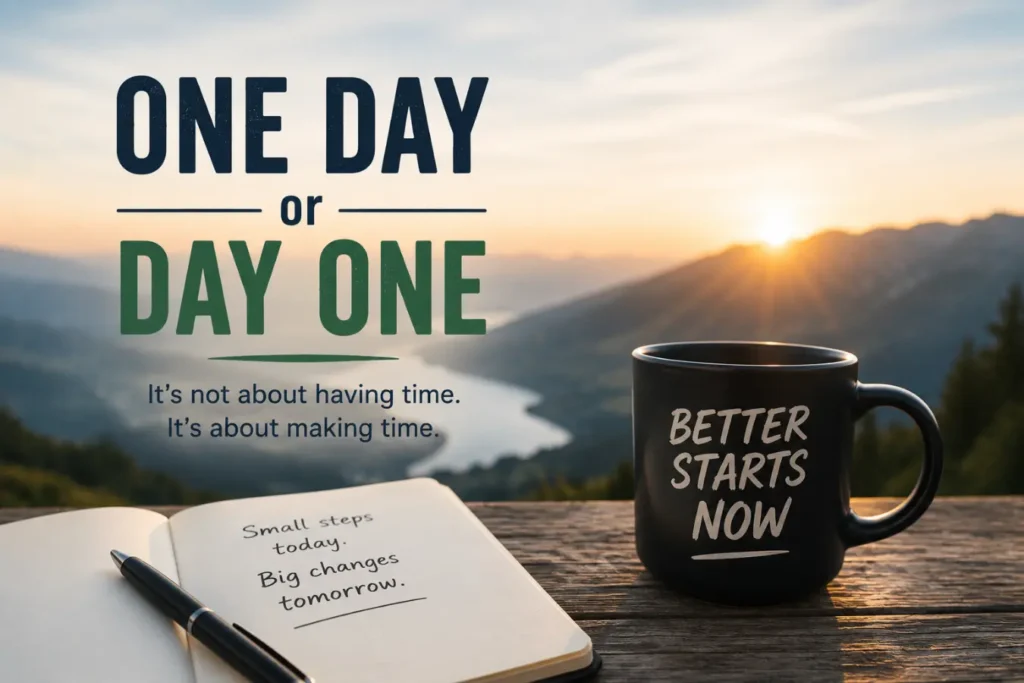
Synonyms and Related Phrases
For “One day”:
- Someday
- In the future
- Eventually
- At some point
- Later in life
For “Day one”:
- First step
- Starting point
- Beginning stage
- Launch day
- Kick-off day
Comparison with Motivation Mindset
| Mindset Type | Phrase Used | Meaning |
| Dreaming | One day | Future hope |
| Planning | One day | Intention |
| Action | Day one | Execution |
| Discipline | Day one | Consistency |
Why “One Day or Day One” Matters
This topic is not just grammar. It is mindset.
- It affects how people think
- It changes motivation style
- It improves communication clarity
- It builds action habits
Many motivational speakers use this idea to inspire action.
Expert Insight (EEAT Section)
Language experts say “one day” represents aspirational thinking, while “day one” represents execution mindset.
Psychologists also explain that people who shift from “one day” to “day one” are more likely to achieve goals.
From an SEO and communication view, this topic is important because it reflects:
- Goal setting behavior
- Personal development language
- Motivation psychology
- Real-life habit building
Understanding one day or day one helps improve both language skills and mindset clarity.
FAQs (People Also Ask)
1. What is the meaning of one day?
It means something that will happen in the future. Moreover, it does not refer to a fixed time or specific moment.
2. What is the meaning of day one?
It means the first day of starting something.
3. Is one day and day one the same?
No, they have different meanings.
4. Which is correct for motivation?
Both are used, but “day one” shows action.
5. Can I use one day in sentences?
Yes, for future dreams and hopes.
6. Is day one used for plans?
Yes, it shows starting a plan.
7. Which is stronger, one day or day one?
“Day one” is stronger because it shows action.
8. Can both be used together?
Yes, in storytelling or motivation content.
Conclusion
Understanding one day or day one helps you improve both language and mindset. “One day” is about dreams and future hopes. “Day one” is about action and starting now.
Both phrases are powerful, but they show different thinking styles. If you only dream, you stay in “one day.” If you act, you move into “day one.”
This simple difference can change how you think about goals, success, and personal growth. Always remember: dreams are important, but action starts on “day one.”
So, next time you plan something big, don’t just say “one day.” Start with “day one” and take action today.